
Crafting Memorable Audio Branding: Custom Jingles by The Jingle WriterAffordable Custom Jingles for Small Businesses: Boost Your Brand with Expert Audio Branding
A custom jingle is a short, original musical phrase with lyrics and melody designed to make a brand instantly recognizable and to improve recall by creating a consistent audio identity that customers remember. This article explains why custom jingles matter for small business advertising, how an efficient production process delivers affordable results, what influences pricing, which formats work best across radio, TV, and digital channels, and how success is measured through real-world outcomes. Small businesses often struggle to stand out in crowded local markets; a well-crafted sonic logo or short radio tag solves that by locking brand messaging into both memory and emotion. Throughout this guide, you will find practical steps, comparison tables, and actionable lists that demystify production timelines, deliverables, ownership versus licensing, and how to prepare for a jingle commission. Keywords such as local business jingle, small business jingle, custom jingle cost, and jingle production for small business are woven into each section to make the guidance practical and discoverable. If you’d like to proceed, the final section explains how to schedule a free consultation and what to expect during that first conversation.
Why Are Custom Jingles Essential for Small Business Advertising?
Custom jingles are short audio branding pieces that function as sonic logos; they engage musical memory systems and increase ad recall by linking melody to brand cues. The mechanism is straightforward: music and lyrics are encoded via separate memory pathways, so pairing a catchy hook with a brand name makes the message more retrievable during purchase decisions, for small businesses, which translates into better name recognition on local radio, higher recall for social media video, and stronger brand identity in hold music and website videos. The cost-effectiveness of jingles comes from repeatability—one melody can be used across many placements, multiplying impact while controlling media spend. Below is a concise list describing the core advertising advantages of jingles for small businesses.
Custom jingles deliver specific marketing benefits:
- Improved recall: melodic hooks reinforce brand names and slogans across repeat exposures.
- Emotional connection: music establishes mood and trust faster than visuals alone.
- Cross-channel efficiency: one jingle scales across radio, social clips, and on-hold messaging.
These advantages explain why investing in audio branding yields compounding returns; understanding how jingles enhance memory leads directly to specific mechanisms of recognition and emotional engagement discussed next.
How Do Jingles Enhance Brand Recognition and Recall?
A jingle enhances recognition by combining a concise melodic hook with a memorable lyric that encodes the brand name or promise, making retrieval easier when consumers encounter the product. Neurocognitive studies and marketing analyses show that music activates associative memory networks, so a short phrase sung to a hook can outperform spoken copy alone in recall tests. For local business jingle campaigns, repetition across radio spots, store announcements, and social ads compounds recognition because the same sonic motif appears in varied contexts. An example: a 6–15 second melodic tag that repeats the brand name two to three times is easier to remember than a 30-second spoken spot with the same message. Understanding this memory advantage is essential before designing a jingle’s emotional tone, which shapes customer response and brand perception.
What Emotional Connections Do Jingles Create with Customers?
Jingles shape emotional responses through tempo, instrumentation, vocal tone, and lyrical phrasing, which together suggest trust, warmth, or urgency, depending on marketing goals. A warm, acoustic arrangement with friendly vocals signals approachability and community focus—useful for neighborhood retailers—while an energetic, rhythmic hook creates excitement and urgency for promotional campaigns. Short melodic motifs can also trigger nostalgia or familiarity, which strengthens long-term loyalty when repeated across channels. By deliberately selecting these musical elements during composition, brands can align emotional objectives—trust, friendliness, reliability—with logical messaging to create persuasive, memorable ads. The role of emotion in audio branding naturally leads to how the production process turns those objectives into a finished jingle.
What Is the Streamlined Process for Creating Affordable Custom Jingles?
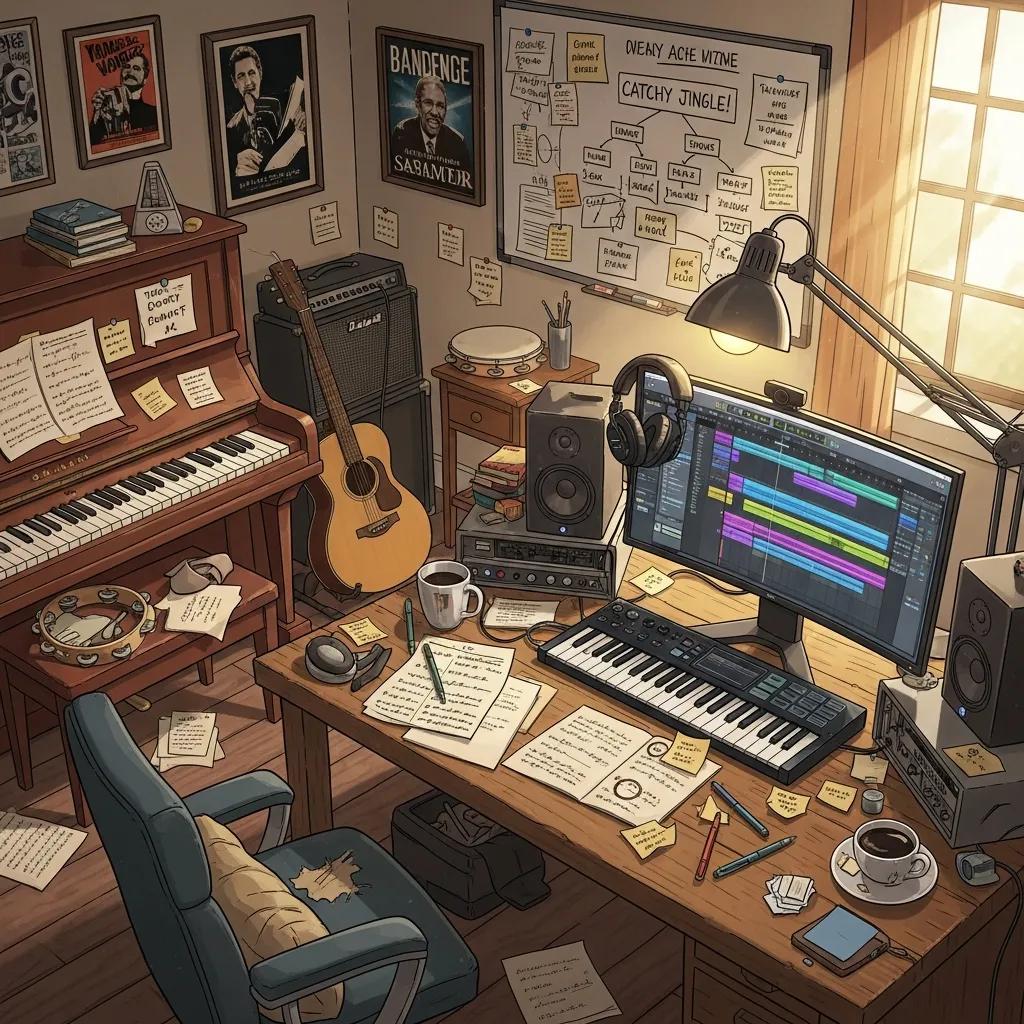
A streamlined jingle process is a four-phase workflow that begins with discovery and ends with delivery of broadcast-ready files, designed to keep costs predictable and turnaround efficient. The process relies on a clear brief—audience, channel, mood, and usage rights—so the composer and client align on objectives before composition begins. Efficient iterations during composition reduce expensive studio time by resolving lyrics and melody in demo form, then moving to final recording, mixing, and mastering with top recording talent when required. Expedited options are available for urgent campaigns, while standard timelines reflect careful production to ensure professional sound quality suitable for radio, TV, and digital platforms. Below is a numbered list summarizing the high-level steps many small businesses follow when commissioning a jingle.
Core production steps:
- Discovery & brief: define audience, channels, mood, and key phrases.
- Composition & demo: write melody and lyric, produce a rough demo for approval.
- Recording & mix: book talent, record vocals/instrumentation, mix, and master deliverables.
These steps map directly to the phase-by-phase table below, which clarifies typical activities, deliverables, and common timeframes for each stage—useful for budgeting and planning. Also note that the initial phase typically begins when a client schedules a free consultation to create the brief.
This phase table shows how discrete tasks produce tangible outputs and how timeframe expectations reduce friction; knowing these milestones helps clients prepare for approvals and revisions that follow the consultation.
How Does the Consultation and Composition Phase Work?
The consultation and composition phase starts with targeted discovery questions that establish audience, primary channels (radio, social, on-hold), desired mood, and any mandatory phrases or brand names to include. During the consultation, the composer documents usage rights preferences (ownership vs licensing), intended duration, and whether access to top recording talent is required, which shapes the composition approach. After discovery, the composer delivers a composition sketch or demo that pairs melody and lyrical concepts for client review, and most efficient workflows allow 1–2 rounds of revisions before booking studio time. This briefing-driven approach minimizes costly re-records later and ensures the composition reflects the brand’s emotional objectives, leading to a smoother recording phase and clearer cost estimate.
What Are the Steps in Recording, Mixing, and Delivering Your Jingle?
Recording begins with selecting appropriate vocalists and instrumental arrangements based on the brief and budget, and top recording talent is engaged when broadcast-grade performance is required. Sessions follow a checklist—record full sing, donut (loop), tag (short endline), and music-only stems—so clients receive modular files for multiple uses and channels. Mixing and mastering focus on clarity and broadcast loudness standards; quality assurance checks ensure the jingle translates across radio, TV, and mobile devices. Final delivery includes labeled stems and master files plus documentation of usage rights; standard timelines typically result in a 2–3 week production window with expedited 2–3 day options when campaigns are urgent.
How Transparent Is the Pricing for Small Business Jingle Packages?
Pricing transparency means explaining cost drivers, offering example package structures, and clearly stating how to obtain a personalized quote tailored to usage scope and production complexity. Primary cost drivers include length and arrangement complexity, whether professional vocalists or bespoke instrumentation are required, and the scope of usage rights (local, regional, national). To avoid surprises, many providers offer example packages that show what is included and clarify that exact pricing depends on the brief; to get a tailored number, schedule a free consultation. Below is an example comparison table that demonstrates how packages might be structured and what typical expectations are for inclusions; exact price ranges vary by project and are set after consultation.
Below is a simple comparison to set expectations:
This table demonstrates how clarity about inclusions funnels clients toward a consultation for an accurate estimate; because costs depend on talent, complexity, and licensing, the consultation is the right path to a precise quote and proposal.
What Factors Influence the Cost of Custom Jingles?
Several variables influence jingle costs and timelines, and understanding them helps small businesses prioritize the features that matter most for ROI. Key factors include the complexity of the arrangement (simple motif vs. multi-instrument production), the level of recording talent required (local singer vs. studio vocalist), the number of revisions, and the breadth of usage rights needed for advertising. Turnaround speed also affects price—expedited production typically increases cost due to compressed studio scheduling and priority mixing. Recognizing these drivers allows businesses to balance budget and impact, and it also clarifies why a personalized quote after a brief is the most transparent and fair approach.
What Are the Differences Between Ownership and Licensing Options?
Ownership (or outright purchase) grants exclusive rights to use a jingle indefinitely under agreed terms, while licensing grants usage for specified channels, territories, or timeframes without transferring full ownership. Ownership is often preferable when a brand expects long-term, exclusive use and wants full control over future adaptations; licensing can be more budget-friendly for limited campaigns or local use. Pros and cons depend on budget and long-term strategy: ownership provides permanence and exclusivity, while licensing offers a lower upfront cost and greater flexibility. The consultation phase helps determine which option fits your campaign goals and budget by clarifying intended use and negotiating terms.
Which Types of Jingles Are Best for Radio, TV, and Digital Marketing?
Different media channels favor different jingle formats, and choosing the right format ensures the jingle performs effectively where your audience encounters it. Radio often favors clear hooks and vocal clarity within 15–30 seconds, while TV may require tighter sync points and slightly longer arrangements to match visuals. Digital platforms prefer short, hook-focused clips—6–15 seconds—that loop well and work in vertical video formats, while on-hold music benefits from loopable motifs and instrumental warmth that reinforce brand tone without distracting callers. The table below compares media types, recommended formats, and typical deliverables to help you choose the most appropriate jingle format for each channel.
This comparative view helps businesses pick formats based on channel needs and budget constraints; knowing the technical deliverables ensures the produced jingle is immediately usable across planned placements. Below is a short checklist of deliverables to request for multichannel campaigns.
Deliverable checklist for cross-channel use:
- Full singing master for longer spots and TV
- Short tag (15s or less) for radio and pre-roll
- Music-only stems for edits and social clips
How Do Radio and TV Commercial Jingles Differ?
Radio jingles must prioritize clarity, melodic hooks, and vocal intelligibility so listeners can instantly grasp the brand message without visuals. Arrangements should emphasize midrange frequencies and concise lyrics. TV jingles often require extra production elements—transitions, synchronized hits, and layered stems—to match visual edits and on-screen motion, and they may include scoring that reacts to picture cuts. Deliverables also differ: TV often requires cue sheets, broadcast specifications, and multiple stems to accommodate post-production, whereas radio requires clean masters and shorter tags. These technical and creative differences affect both the production approach and costs, and they should be specified in the initial brief to ensure the jingle meets broadcast standards.
What Are the Benefits of Social Media and On-Hold Music Jingles?
Short-form social jingles maximize shareability and recognition in feed-based environments by delivering a sharp hook within the first 1–3 seconds, increasing the chance of repeat listening and brand retention. Loopable motifs and vertical edits help the jingle adapt to short social formats, such as Stories or Reels, where attention is limited and rapid recall matters. On-hold music functions differently: it reinforces brand tone and reduces perceived wait times, turning a functional moment into an opportunity for subtle branding. For both digital and on-hold use, providing stems and short loopable versions ensures easy integration and long-term reuse across platforms.
What Success Stories Demonstrate the Impact of Custom Jingles for Small Businesses?
Well-documented small-business cases show measurable gains in local brand recognition and engagement after introducing a custom jingle, especially when the jingle is used consistently across radio and digital placements. Case studies typically follow a problem → solution → outcome arc: a local advertiser with low name recall commissions a short, memorable tag; the jingle runs on local radio and social ads; post-campaign surveys show improved recall and higher store visits. Audio demos and portfolio examples—from neighborhood campaigns to larger regional spots—illustrate how melody and lyric choices map to results. The themes from client feedback frequently emphasize increased memorability and a professional sound that elevated perceived credibility, which we explore in the testimonial summary below.
Select case study highlights:
- Local retailer increased ad recall by improving name repetition in a 15-second tag used on radio and social media.
- The service business used an on-hold motif and a brief radio spot to increase customer callbacks and appointment bookings.
- Community nonprofit leveraged a warm, melodic jingle to strengthen donor recognition across events and ads.
Which Case Studies Highlight Increased Local Brand Recognition?
Several campaign summaries show that when small businesses adopt a consistent jingle across radio, social, and on-hold channels, recognition metrics improve within weeks, especially in tight local markets. For example, a local service provider that introduced a 20-second jingle and used it in radio rotation and website videos reported higher unaided recall in local surveys and a noticeable uptick in inbound calls tracked during the campaign period. Another neighborhood retailer that used a loopable motif in Instagram reels and in-store announcements saw improved social engagement and higher foot traffic during promotions. These case studies illustrate the principle that repetition across channels compounds recognition and that a tailored jingle aligns customer perception with brand promises.
What Do Client Testimonials Reveal About Jingle Effectiveness?
Client feedback often converges on three themes: memorability, professional polish, and an easy collaborative process that minimizes disruption to daily operations. Testimonials typically note that a clear, catchy hook made the company name stick with listeners, that studio-grade production elevated perceived credibility, and that the composer’s process made revisions straightforward. These common insights suggest that, beyond creative quality, the production workflow and the flexibility of deliverables are central to small-business satisfaction. Readers who value these outcomes should consider scheduling a free consultation to discuss how a custom jingle could be tailored to similar goals.
Where Can Small Businesses Schedule a Free Consultation to Get Started?
Small businesses can schedule a free consultation to begin the discovery process, identify objectives, and receive a personalized quote based on intended usage and production scope. To take that step, you can schedule a free consultation. During the consultation, you will discuss the audience, channels, mood, timing, and rights, and the session will result in a clear jingle brief that enables accurate pricing and timelines. Providers that work with top recording talent and have portfolio experience across national and local brands typically use this consult to recommend packages and expedited options when needed. For many small businesses, the consultation clarifies whether outright ownership or tailored licensing is the better fit, and it generates a written scope and next-step timeline for proposals and approvals.
How the free consultation helps and what to expect:
- Discovery agenda: audience, channels, brand phrases, and rights preferences documented.
- Output: a concise jingle brief, suggested formats, and a path to a custom quote.
- Next steps: proposal with timeline (standard 2–3 week turnaround or expedited 2–3 day option) and revision milestones.
To begin the process, you can schedule a free consultation, and you will receive a short checklist of preparation items and an estimated timeline for a personalized proposal. Cary Reich, The Jingle Writer, routinely initiates projects this way—offering custom jingle writing and production for radio, TV, social media, website videos, and on-hold messaging—with standard deliverables that include full sing, donut, tag, and music-only versions and options for outright ownership or licensing.
How Does the Free Consultation Help Tailor Your Jingle Needs?
The free consultation functions as the discovery engine: it identifies the target audience, primary channels, desired emotional tone, and any mandatory brand phrases, which together form the jingle brief. By clarifying whether the campaign needs local radio tags, TV sync-ready cues, or short social motifs, the consultation informs the production level and the deliverables recommended. The output is a practical scope document that outlines suggested formats, provisional timeframes (standard 2–3 weeks; expedited 2–3 days), and a path to a custom quote that reflects talent and licensing choices. This tailored brief reduces ambiguity and ensures that composition and recording decisions align with your marketing objectives.
Could you tell me what the next steps are after scheduling a consultation?
After the consultation, you should expect a written proposal or quote within a few business days that details recommended deliverables, the production timeline, a revision allowance, and ownership/licensing options tailored to your goals. Once you approve the proposal, composition proceeds with demos and a structured revision cycle that minimizes studio time and cost, followed by recording, mixing, and delivery of labeled stems and masters. Standard projects typically complete within a 2–3 week window, while expedited needs can be met in 2–3 days with prioritized scheduling. Approvals and final rights documentation occur at delivery, ensuring you receive the agreed-upon usage and file package for immediate deployment.
Frequently Asked Questions
How can I measure the effectiveness of a custom jingle for my business?
Measuring the effectiveness of a custom jingle involves tracking key performance indicators (KPIs) such as brand recall, customer engagement, and sales metrics. Conducting pre- and post-campaign surveys can provide insights into changes in brand recognition. Additionally, monitoring social media interactions, website traffic, and customer feedback during and after the jingle’s use can help assess its impact. Analyzing these metrics over time will give you a clearer picture of how well the jingle resonates with your audience and contributes to your marketing goals.
What types of businesses benefit most from custom jingles?
Custom jingles can benefit a wide range of businesses, particularly those in competitive local markets such as retail stores, service providers, restaurants, and nonprofits. Businesses that rely on brand recall and emotional connections with customers, such as local coffee shops or family-owned stores, often gain significant advantages. Additionally, companies looking to enhance their presence on social media or radio can leverage jingles to create memorable audio branding that stands out and fosters customer loyalty.
Do you know if I can use a jingle across multiple platforms?
Yes, one of the key advantages of a custom jingle is its versatility across various platforms. A well-crafted jingle can be adapted for radio, television, social media, and even on-hold messaging. By creating different versions or edits of the jingle, businesses can ensure that it fits the specific requirements of each platform while maintaining brand consistency. This cross-channel usage maximizes the jingle’s impact and reinforces brand recognition among diverse audiences.
What should I prepare for the consultation before commissioning a jingle?
Before your consultation, it’s helpful for you to prepare a brief outlining your business objectives, target audience, preferred channels, and any specific phrases or themes you’d like to include in the jingle. Please review the emotional tone you’d like to convey and any jingles you come up with. Having this information ready will help facilitate a more productive discussion with the composer, ensuring the final jingle aligns closely with your brand identity and marketing goals. How long does it typically take to produce a custom jingle?
The production timeline for a custom jingle generally ranges from 2 to 3 weeks, depending on the project’s complexity and the specific requirements outlined during the consultation. This timeline includes phases such as discovery, composition, recording, mixing, and delivery. For urgent campaigns, expedited options may be available, allowing for completion within 2 to 3 days. Understanding these timelines helps businesses plan their marketing strategies effectively around the jingle’s launch.
Are there any copyright issues I should be aware of when using a jingle?
Yes, copyright considerations are crucial when using a jingle. You can either own the jingle outright or license it for specific uses. Ownership grants you exclusive rights to the jingle, allowing for unlimited use and modifications. Licensing, on the other hand, provides usage rights for a defined period or specific channels. It’s essential to clarify these terms during the consultation to ensure your jingle aligns with your long-term marketing strategy and avoids potential legal issues.
What are some common mistakes to avoid when commissioning a jingle?
Common mistakes when commissioning a jingle include failing to clearly define your target audience, failing to communicate your brand’s emotional tone, and overlooking the importance of a catchy hook. Additionally, rushing the consultation process can lead to misalignment between your vision and the final product. It’s also important to avoid using overly complex lyrics or melodies that may hinder recall. Taking the time to prepare and communicate effectively will help ensure a successful jingle that resonates with your audience.
Conclusion
Investing in a custom jingle can significantly enhance your brand’s recognition and emotional connection with customers, thereby improving recall and engagement. By leveraging a well-crafted audio identity, small businesses can effectively stand out in competitive markets and maximize their advertising impact across various channels. To explore how a tailored jingle can elevate your brand, please schedule a free consultation today. We want to help you create a memorable sonic logo that resonates with your audience and drives results.

Cary Reich is a master jingle-writer with over 35 years of experience creating brand‐defining melodic slogans and audio identities. Since 1985, Cary has crafted memorable campaigns for both national and local clients — including Budweiser, Firestone, Gold’s Gym, Goodwill, and YMCA — blending creative vision and musical expertise to make businesses not just heard, but remembered.