
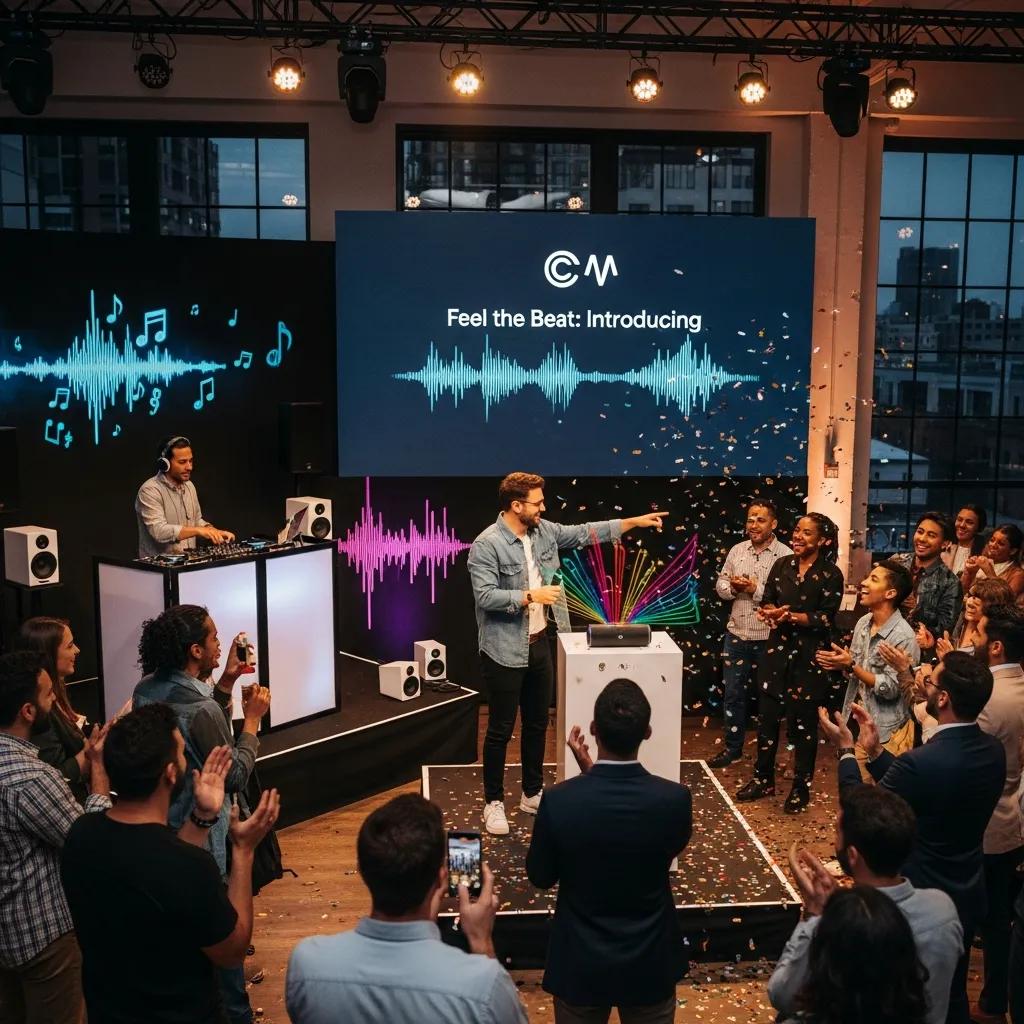
Using Jingles for Successful Product Launches: Crafting Memorable Audio Branding to Boost New Product Marketing
A jingle is a short, purpose-built piece of music that encodes a product’s identity through its melody and lyrics, so listeners recognize and recall it quickly. This article explains why product launch jingles succeed where plain copy and visuals sometimes fail by triggering memory encoding, creating emotional associations, and delivering consistent audio cues across channels. Readers will learn how melody, hook, tempo, and lyrical clarity combine to make a jingle effective; how custom jingles and sonic branding fit into launch plans; and practical steps for production, timelines, and measurement. The guide covers case studies that illustrate measurable uplift, a production timeline with typical durations and expedited choices, and metrics you can use to validate audio impact. Throughout, targeted phrases like product launch jingle, sonic branding for product introduction, and brand jingle effectiveness are used to connect strategy with actionable execution and to help launch teams plan music-driven introductions that scale across radio, social, and web video.
How Do Jingles Enhance Brand Recognition During Product Launches?
A jingle enhances brand recognition by turning product identity into an audio signature that the brain stores via melody and repetition, thereby accelerating retrieval when consumers encounter related stimuli. The mechanism works because simple melodic hooks and repeated phrases create strong memory traces; auditory cues bypass visual competition and attach instantly to brand messages, improving quick identification in cluttered launch environments. The practical benefit is faster aided and unaided recall across paid and earned channels, which shortens the path from awareness to trial. This functional bridge from sound to recognition helps teams design placement strategies that multiply listening opportunities and reinforce product identity.
What Makes a Jingle Memorable and Effective for New Products?
Memorable jingles combine a short, distinctive hook with repetition, a precise lyrical match to the product promise, and arrangement choices that reflect brand personality. A hook of four to eight notes that repeats at predictable intervals gives listeners a cue they can hum back. At the same time, sparse lyrics let the melody carry the identity without cognitive overload. Tempo and instrumentation should mirror the target audience’s emotional state—upbeat tempos for energy products, warmer tones for comfort-oriented launches—so the sonic palette aligns with positioning. These musical choices function as design variables you can A/B-testserve in early creative rounds to find the shortest, most recognizable motif for cross-channel use.
How Emotional Connections Through Audio Branding Drive Customer Loyalty

Audio branding builds emotional connections by attaching mood and memory to product experiences, and that emotional tagging increases long-term preference and repeat purchases. When a melody evokes nostalgia or excitement, it amplifies perceived value and strengthens brand-affect links that survive beyond a single campaign. Consistent use of the same sonic cues across ads, onboarding videos, and in-product sounds creates a familiarity that turns first-time buyers into loyal customers over multiple touchpoints. Designing for emotion requires mapping desired feelings to musical elements and then measuring affinity through post-exposure surveys to confirm the link between audio and loyalty.
What Is the Role of Custom Jingles in New Product Marketing Strategies?
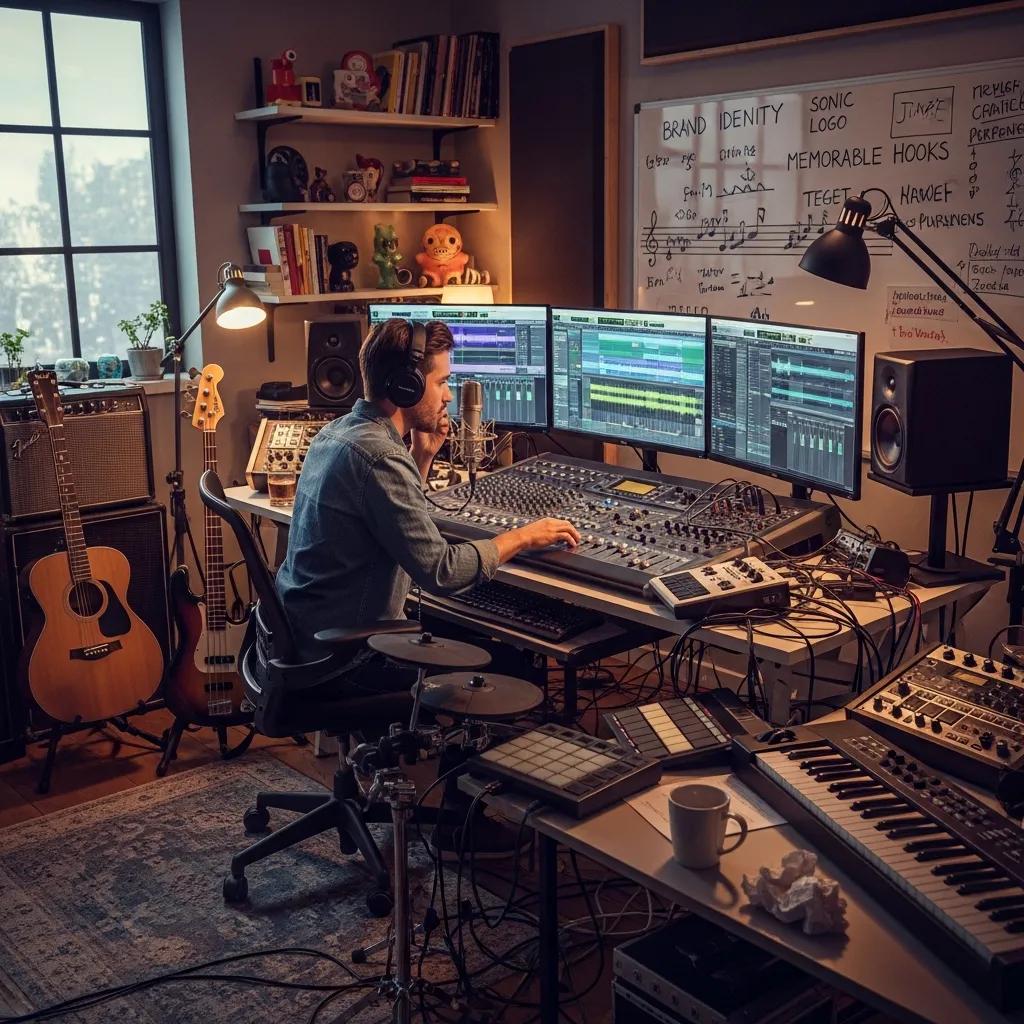
Custom jingles act as purposive audio assets that introduce product identity, signal key benefits, and increase ad engagement through tailored melodic storytelling. As bespoke compositions, they are crafted to reflect brand voice and product attributes rather than rely on pre-existing licensed music, giving teams greater control over duration, lyrics, and usage rights. The role of a custom jingle is both strategic—shaping perception and recall—and tactical—providing adaptable stems and edits for TV, radio, pre-roll, and social creative. Commissioning custom music is most valuable when product differentiation depends on a distinct persona or when repeated exposure is integral to the launch plan.
How Are Custom Jingles Tailored to Reflect Brand Identity?
Tailoring begins with a discovery brief that maps product personality, core benefits, target demographics, and preferred emotional tone; composers then choose tempo, key, and instrumentation to reflect those inputs. For example, a tech productivity tool might use a crisp, syncopated rhythm and bright synths to suggest efficiency. In contrast, a wellness product uses organic acoustic textures to imply calm and trust. Vocal choices—including gender, age, and delivery style—are selected to match audience expectations and ensure lyrical phrasing communicates the product promisecleary that. Iterative demos and client reviews refine these elements so the final jingle reads as a natural extension of brand identity.
What Are the Benefits of Flexible Jingle Usage Rights for Businesses?
Flexible usage rights let a launch team choose between outright ownership and licensing models depending on budget, campaign scope, and long-term plans; each model comes with trade-offs based on factors that affect ad placements and future reuse. Ownership provides maximum control and removes ongoing fees, which suits long-lived product lines and repeated campaigns. Licensing can lower upfront costs and is suitable for time-limited launches or experimental campaigns that may not require perpetual rights. Deciding between these options, When deciding consider projected media spend, international distribution, and whether the jingle will evolve into a broader sonic identity used across future products.
How Can Sonic Branding Support a Successful Product Introduction?
Sonic branding, which includes audio logos and motifs, complements jingles by providing micro-cues that maintain recognition in short-format environments and app experiences. Where a jingle tells a short musical story across 15–30 seconds, sonic logos condense brand identity into a 1–3-secondover motif that triggers immediate recognition at app launch, in 3-second pre-roll, or in-store displays. Coordinating a primary jingle with a family of shorter variants ensures consistent audio grammar across channels and allows teams to select versions based on attention span and placement. This multimodal approach maximizes recall while respecting platform constraints.
While the power of music in marketing is undeniable, the field of sonic branding continues to evolve, seeking its complete breakthrough in consumer engagement.
Sonic Branding: Music’s Power in Consumer Marketing
Because music holds a strong power over people, and its impact on consumers is relatively direct, it is invariably an interesting medium for marketers. Although Sonic Branding – branding with music and sound – has been seen as ‘the next big thing’ in branding toward consumers for about a decade, it is a scattered field still waiting for its breakthrough.
Sonic branding: A consumer-oriented literature review, C Gustafsson, 2015
What Are Key Elements of a Product Launch Audio Strategy?
A launch audio strategy outlines the core jingle, short-format edits, an audio logo, and channel-specific mixes so each asset is optimized for context and audience exposure. The plan defines cadence—how often the motif should reappear in a spot—and variants for social, radio, and long-form video to preserve identity across formats. It also prescribes voice-over directions, permitted lyrical references to product claims, and mixing standards that ensure clarity on low-bitrate devices and clarity on voice-over. Theseements create a reproducible toolkit that can be deployed as the campaign scales.
The essential components of an audio launch toolkit include:
- Core 30-second jingle for flagship spots and hero video.
- 15-second social edits that preserve the hook and messaging.
- 2–3 second audio logo for app starts, pre-roll, and UI touches.
This checklist helps producers plan deliverables that cover the most valuable listening moments.
How Do Audio Logos and Sonic Branding Create Lasting Impressions?
Audio logos form lasting impressions by delivering high-frequency repetition in contexts where listeners expect short cues, and that frequent, context-appropriate exposure strengthens associative memory. Short motifs succeed because they are compact and easily encoded; repeated in pre-roll, in-app, or on-hold audio, they become shorthand for the brand. Placement strategies that favor high-impression environments—such as streaming ads and in-app experiences—raise listening frequency without increasing message length. Selecting an audio logo with a precise interval and timbral contrast ensures it stands out even when heard briefly.
Which Case Studies Demonstrate the Effectiveness of Jingles in Product Launches?
Historical launches show that integrated audio strategies increase recognition and, in many cases, measurable engagement and recall for new products. Large brands have used jingles and sonic cues to create rapid brand recognition and support multi-year campaigns. At the same time, startups have adapted the approach with shorter hooks and social-first edits to fit limited budgets. Distilling these cases reveals tactical lessons: match motif to positioning, seed the motif across the highest-attention channels first, and prepare short variants for social platforms where repetition compounds quickly.
How Have Brands Like Coca-Cola and Intel Used Jingles Successfully?
Coca-Cola and Intel illustrate two paths: Coca-Cola pairs lyrical hooks with broad emotional storytelling to sustain brand warmth. At the same time, Intel uses a concise sonic logo to signal technology trust across devices and ads. Coca-Cola’s melodic phrases are used in TV and experiential marketing to build affective bonds, whereas Intel’s four-note motif functions as a trust cue at the start of product demos and commercials. Both examples show alignment between sonic design and brand promise; the takeaway is to select a sonic strategy that reinforces the product’s core narrative and to prioritize placements that maximize repeat-with-align listening.
| Brand | Tactic | Observable Outcome |
|---|---|---|
| Coca-Cola | Melodic, lyrical jingles in TV and events | Strengthened emotional affinity and cross-channel recall |
| Intel | Concise 1–3 second sonic logo across devices | Instant product recognition and trust cueing |
| Example Startup (scaled approach) | Short hooks for social, repurposed as in-app cues | Faster social engagement and measurable ad lift |
These examples show that both long-form melodic storytelling and micro-logos can produce strong recognition when matched to placement and audience.
For teams that want to explore similar approaches for their launches, a direct planning conversation can be the most efficient next step. The Jingle Writer, led by Cary Reich, provides custom jingle writing, voice-over, and audio branding services with flexible usage rights and access to top-tier recording talent nationwide; typical project timelines average 2–3 weeks, with expedited options and voice-over available. Scheduling a short consultation helps translate case-study lessons into a tailored plan for your product introduction.
What Lessons Can Startups Learn from Established Jingle Marketing Campaigns?
Startups should prioritize short, repeatable hooks that fit social and mobile contexts, repurpose those hooks as audio logos, and align placements with audience listening habits to get maximum impact from limited budgets. Budget-conscious teams can focus on 15-second versions for paid social and pre-roll, plus a 2–3 second motif for in-app use to create repeated exposures at low cost. Early testing with small A/B runs identifies the clearest hook before broader buys. These scaled tactics enable startups to borrow the principles of large campaigns while maintaining fiscal discipline.
This strategic approach for smaller entities underscores the growing recognition of audio branding’s potential, particularly for small and medium-sized businesses seeking effective implementation models.
Audio Branding Strategies for Effective Implementation
The objective of this research is twofold: firstly, to highlight the potential of audio branding for SMEs; and secondly, to develop a comprehensive guidance model tailored to assist these enterprises in implementing effective audio branding strategies.
AUDIO BRANDING GUIDANCE MODEL IN THE CASE OF SMALL AND MEDIUM-SIZED BUSINESSES, 2024
Starter tactics for smaller budgets:
- Prioritize a 15-second social edit to test hook effectiveness.
- Create a 2–3 second audio logo to stitch into product experiences.
- Reuse stems across spots to reduce production costs.
These tactics help new brands get the recall benefits of jingles without replicating big-budget production.
What Is the Process and Timeline for Creating a Jingle for a Product Launch?
Creating a jingle follows a staged workflow that moves from discovery to delivery, with clear decision gates for creative approval and rights selection. The process typically begins with a brand brief and mood references, proceeds through composer sketches and demo revisions, moves into session recording with vocalists and musicians, and finishes with mixing, mastering, and delivery of stems and edits. Each stage serves a defined purpose: discovery aligns creative intent, demos validate melodic direction, and recording produces final assets for channel-specific mastering. This structured approach lets teams plan around launch dates and choose expedited tracks if timelines compress.
Introductory explanation of the typical production timeline and stage responsibilities sets expectations before the table below.
| Phase | Typical Duration | Typical Deliverable |
|---|---|---|
| Discovery & Brief | 1–3 days | Brand brief, references, objectives |
| Composition & Demos | 3–7 days | 2–4 melodic demos and lyrical sketches |
| Recording Session | 1–3 days | Vocal and instrumental tracking |
| Mixing & Mastering | 2–5 days | Final mix, edits, stems, short-form versions |
This EAV-style timeline clarifies where time is commonly spent and where expedited work can compress schedules. Choosing an expedited option often shortens demo iteration or recording windows and may reduce the number of revision cycles.
After reviewing the stages and durations, teams frequently ask about expedited options and the trade-offs. Expedited schedules typically accelerate composition and recording by reducing iteration cycles and prioritizing session booking; this can increase cost and compress creative testing opportunities, so deciding requires balancing launch deadlines against the value of revision-driven refinement. For readers with fixed launch dates, requesting a consultation to review timelines and expedited options ensures production choices align with go-to-market priorities and media flighting.
How Does a Master Jingle Composer Develop Unique Audio Melodies?
A master jingle composer begins by researching product positioning and audience listening contexts, then sketches multiple motifs that capture different emotional angles tied to the brief. The composer iteratively refines promising sketches into demo recordings that test hook clarity, lyrical fit, and placement timing, incorporating client feedback at each revision. Collaboration often narrows choices to a primary motif and a secondary motif for shorter edits, adapting,adaptingand streamlining shorter edit, adapting, anding, sadaptinghis composer-led workflow balances creative originality with client input to create distinct, launch-ready melodies.
What Are Typical Project Turnaround Times and Expedited Options?
Standard turnaround times for a compact jingle project typically range from 2 to 3 weeks, covering discovery through final delivery for a single core jingle and its short variants. Expedited options can compress the schedule to one week by limiting the number of demo rounds, prioritizing session scheduling, and using experienced session vocalists and producers who can deliver quickly. The trade-off for faster delivery is typically fewer revision cycles and tighter creative windows, which can affect the degree of polish and the number of alternate edits produced. Teams should weigh launch-critical deadlines against the benefits of iterative refinement when selecting a speed tier.
| Stage | Typical Duration | Typical Value |
|---|---|---|
| Composer concept & sketch | 1–3 days | Rapid idea generation and direction |
| Demo revision rounds | 2–5 days | Refinement and client alignment |
| Recording & tracking | 1–3 days | Capture of vocals and instruments |
| Mix & delivery | 2–4 days | Final masters and stems for distribution |
This production table provides a practical rule of thumb for calendar planning and highlights where expedited schedules compress the process.
How Do Businesses Measure the Impact of Jingles on Product Launch Success?
Measuring jingle impact involves combining qualitative listening tests with quantitative ad and brand metrics to isolate audio contribution to recall, engagement, and conversion. Core metrics include aided and unaided recall from surveys, ad engagement and click-through rates, brand lift studies that measure perception changes, and conversion uplift in controlled A/B tests. Designing simple experiments—such as A/B testing identical creatives with and without the jingle or comparing short-form vs long-form versions—helps attribute effects specifically to audio. Using mixed methods gives a fuller picture of brand jingle effectiveness and informs iterative improvements for future campaigns.
Introductory paragraph explaining why a measurement framework should combine survey and analytics data and how the table below compares standard metrics.
| Metric | How It’s Measured | Typical Benchmark / Insight |
|---|---|---|
| Aided recall | Post-exposure surveys asking about recognition | Meaningful lift often 10–20% vs control |
| Unaided recall | Open-ended survey recall tests | Indicates strong associative memory |
| Ad engagement | Click-throughs, view-through rates | Higher hook clarity increases CTR |
| Conversion uplift | A/B test comparing lift with/without audio | Variable; look for relative improvement |
What Metrics Indicate Brand Jingle Effectiveness?
Aided and unaided recall indicate whether the jingle is being encoded in consumer memory, while ad engagement metrics and conversion uplift indicate whether the audio is influencing behavior. Aided recall is measured by providing respondents with brand cues and asking whether they recognize the jingle; unaided recall asks for free recall and is a stronger indicator of deep encoding. Ad engagement and view-through rates indicate whether the jingle improves attention and message processing, and conversion uplift in experiments provides direct evidence of commercial impact. Combining these metrics helps teams balance brand-building objectives with direct-response outcomes.
How Does Customer Feedback Inform Audio Branding Improvements?
Customer feedback translates into specific adjustments in melody, vocal style, or length when teams use structured listening tests and short surveys that probe clarity, believability, and emotional fit. Collecting qualitative comments alongside quantitative ratings reveals whether lyrics are confusing, whether the hook is memorable, and whether the vocal timbre aligns with audience expectations. Iterative changes based on this feedback—such as simplifying lyrics, shortening intros, or changing instrumentation—focus on improvements where they increase clarity and memorability the most. Closing the loop with quick follow-up tests ensures adjustments actually move the needle.
For teams ready to set up measurement frameworks tied to revenue and recall goals, an expert review of tracking plans can accelerate implementation. The Jingle Writer offers consultative support to map measurement approaches to your launch objectives and to design simple A/B tests and survey instruments that isolate the impact of audio. Engaging in measurement planning helps ensure that audio investments produce traceable outcomes aligned with your product launch KPIs.

Cary Reich is a master jingle-writer with over 35 years of experience creating brand‐defining melodic slogans and audio identities. Since 1985, Cary has crafted memorable campaigns for both national and local clients — including Budweiser, Firestone, Gold’s Gym, Goodwill, and YMCA — blending creative vision and musical expertise to make businesses not just heard, but remembered.