
Table of Contents

Professional On-Hold Messaging: Captivate with Jingles

by | Feb 13, 2026 | General Info

Professional On-Hold Messaging with Custom Jingles: Enhance Caller Experience and Boost Brand Recognition

On-hold jingles are short, branded musical pieces combined with voice messaging that play. At the same time, callers wait on the line, transforming idle hold time into an opportunity to reinforce identity and reduce hang-ups. Research and industry experience show that callers exposed to purposeful audio branding remain engaged longer and form stronger memory associations; in practice, a memorable melody paired with concise messaging increases brand recall and reduces perceived wait time. This article explains what on-hold jingles are, how they work, and why custom production outperforms generic music on phone systems. You will learn production steps, technical file requirements, legal and licensing considerations, use cases for marketing and upselling, and where to hear professional demos. Practical checklists, comparison tables, and actionable steps are provided so you can evaluate options, measure outcomes, and decide whether a bespoke jingle project is right for your business. Keywords covered include phone system music, on-hold jingles, custom on-hold messages, audio branding for phone systems, and jingle licensing to support discoverability and practical implementation.

Why Choose Custom On-Hold Jingles Over Generic Music for Your Business Phone System?

Custom on-hold jingles are purpose-built audio branding pieces that use melody, lyrics, and vocal character to express a brand’s personality, and they outperform generic background music by creating distinctive recall cues. A custom jingle works by combining a vocal hook and a melody motif that repeat during calls, directing attention and creating associative memory; this mechanism increases recognition and reduces the perceived duration of hold time. The specific benefit is measurable: branded audio increases caller engagement and provides a reusable creative asset across marketing touchpoints. Understanding these advantages helps businesses decide whether to invest in custom production or rely on generic music.

Custom jingles offer three main benefits that matter for telephone marketing and caller experience:

  • Stronger Brand Recall: A concise vocal hook ties messaging directly to the brand and improves later recognition.
  • Higher Caller Engagement: Professional arrangements sustain attention, reducing hang-up rates and perceived wait time.
  • Marketing Utility: Jingles can be repurposed for IVR prompts, ads, and in-store audio to maintain consistency across channels.

These benefits show why bespoke production is an investment in audio branding, and the next section details how a professional jingle production process turns those strategic goals into finished tracks.

How Do Custom Jingles Enhance Caller Experience and Brand Recall?

Custom jingles enhance the caller experience by combining melody, repetition, and targeted messaging to help callers associate positive audio cues with the brand and strengthen memory retention. The mechanism is straightforward: repetition of a vocal hook and melodic motif creates a retrieval cue, while production quality and arrangement hold attention during otherwise idle time. In practice, a short branded tag or donut jingle can reduce perceived wait time and lower abandonment by making the hold experience feel purposeful rather than empty.

Considering these effects leads directly to vendor selection—experienced producers and the right voice talent make the difference in realizing these cognitive benefits through professional delivery and strategic messaging.

What Unique Value Does Cary Reich, The Jingle Writer, Offer in On-Hold Jingle Production?

Cary Reich, The Jingle Writer, focuses on bespoke audio jingles designed specifically for telephone hold systems and emphasizes client brand identity over composer signature style to keep the spotlight on the business. Core offerings include access to a nationwide roster of top-tier recording talent, flexible ownership or licensing options, and package deliverables that typically include full sing, donut, tag, and music-only versions. Hence, the asset fits multiple IVR and PBX uses. Turnaround options are explicit: average projects complete in 2–3 weeks, with expedited delivery available in as little as 2–3 days when needed. This combination of creative focus, professional talent, and predictable timelines supports the consistent integration of audio branding across phone system music and IVR hold music.

These producer advantages set expectations for the workflow and deliverables that follow in the step-by-step production section.

What Is the Step-by-Step Process for Creating Professional On-Hold Jingles?
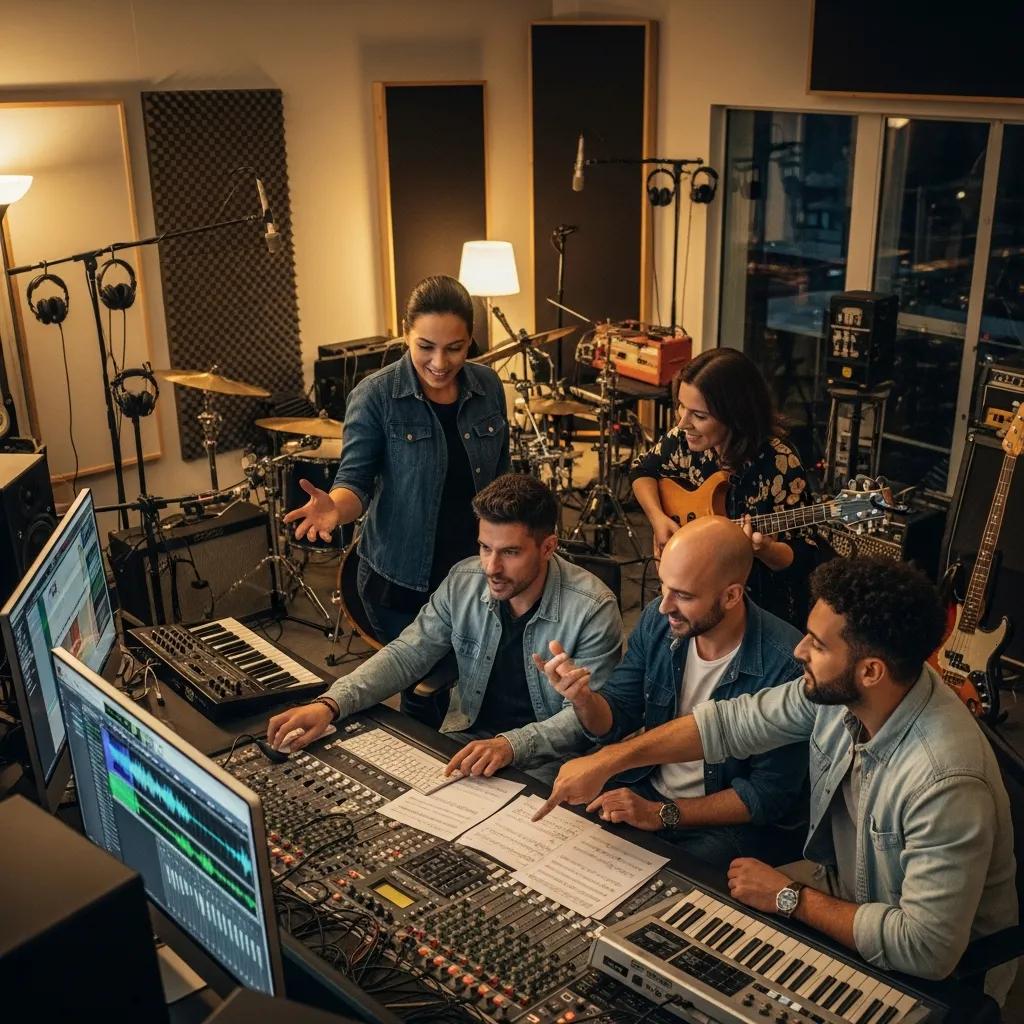
A clear production workflow ensures strategic alignment and technical compatibility from discovery through final delivery, and the process typically follows consultation, composition, recording, and delivery stages. Each phase produces defined deliverables: discovery documents and tone references from the consultation; demo melodies and lyric options during composition; tracked vocal and instrumental stems from recording; and final mixed/mastered files in multiple formats at delivery. The benefit of a disciplined workflow is predictable quality, smooth approval cycles, and rapid deployment to IVR and PBX systems.

Follow these numbered steps for a typical professional on-hold jingle production:

  1. Consultation and Discovery: Define brand voice, caller profiles, messaging priorities, and technical requirements.
  2. Composition and Demo: Create melody motifs, hooks, and lyric drafts; produce demo versions for approval.
  3. Recording and Performance: Track vocals and instruments with chosen talent; edit for clarity and tone.
  4. Mixing, Mastering, and Delivery: Prepare loopable edits, tag and donut versions, and deliver MP3/WAV/ulaw files with licensing details.

Below is a compact process table that maps each phase to deliverables and typical timelines so you can compare expectations across vendors.

PhaseDeliverablesTypical Turnaround
ConsultationBrand brief, caller profile, tone references1–3 days
CompositionDemo full sing, donut, tag, music-only drafts3–7 days
RecordingVocal and instrumental stems, alternate takes1–5 days
Mixing & DeliveryMixed WAV/MP3, loop edits, ulaw if required, licensing notes2–14 days

This process table clarifies expectations: consultation informs composition, composition leads to recording choices, and recording quality determines the final deliverables and system compatibility.

How Are Voices and Music Selected to Match Your Brand Identity?

Voice and music selection starts from a simple principle: match vocal timbre, delivery style, and musical genre to the brand persona and primary caller demographics so the audio aligns with callers’ expectations and the message objective. Selection criteria include tone match (warm, authoritative, or friendly), demographic fit (age, accent, and gender as they relate to the target audience), and genre/arrangement (acoustic, pop, corporate, or ambient) that support clarity and call-to-action cues. Examples include choosing a warm, conversational voice for service-oriented brands or a crisp, energetic lead for retail promotions to encourage quick responses. This selection process ensures the jingle’s vocal hook and instrumental bed work together to drive recognition and action.

Matching voice and music naturally connects to technical delivery—files and edits must be compatible with phone systems, which is the next essential topic.

What Technical Specifications Ensure Seamless Integration with Phone Systems?

Technical compatibility requires delivering files in multiple formats and edits engineered for looping and truncated playback, so phone systems handle the audio cleanly, and callers hear smooth transitions. Common requirements include high-quality WAV masters for archival, MP3 for general use, and ulaw/PCM variants for legacy PBX/IVR systems; provide loopable donut edits, short tag versions, and clear file naming conventions for easy ingestion. Mixing considerations—such as center-panned vocals, moderate dynamic range, and frequency balancing—help intelligibility on handset speakers and mobile devices. This technical prep prevents playback artifacts and facilitates immediate deployment across IVR hold music setups.

These format and edit standards allow jingle assets to be measured and tested in real systems, which supports using hold time as an active marketing channel.

How Can On-Hold Jingles Convert Hold Time into Effective Marketing Opportunities?
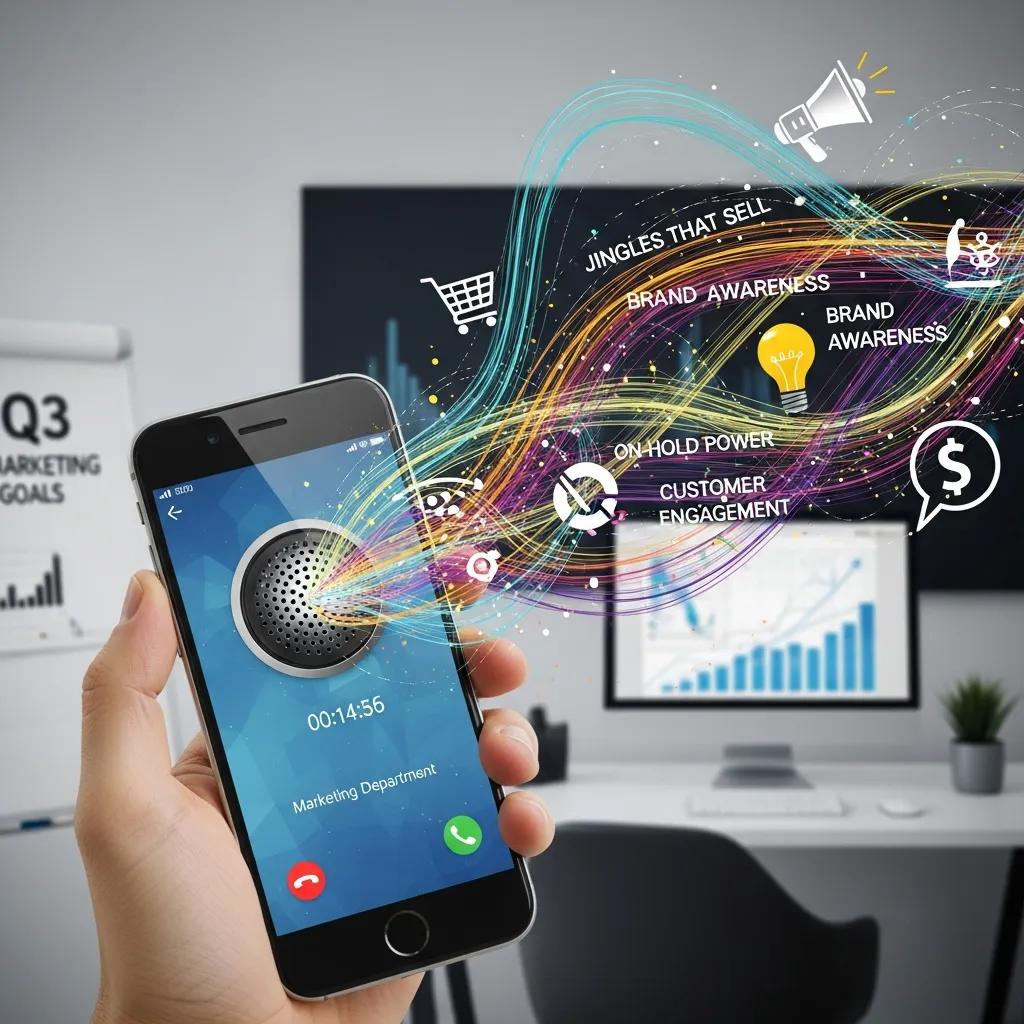
On-hold jingles convert wait time into marketing moments by combining musical hooks with concise promotional messaging that aligns with caller intent and business goals, enabling cross-sell, upsell, and retention strategies without increasing call handling time. The mechanism is that a memorable hook primes listeners while short promotional tags or rotated offers provide timely information that can influence purchasing decisions or encourage callbacks. The business result is improved caller retention and measurable lift in offer response when audio messages are well-targeted and not overly intrusive. Thinking in terms of metrics and testing leads to better outcomes, which is why tracking hang-up rates and offer engagement is essential.

Use cases and tactics below clarify how to structure messaging for marketing outcomes.

  • Concise promotional rotation: Short 10–15 second promo tags interleaved with music to avoid fatigue.
  • Contextual offers: Align offers with likely caller intent (billing, service upgrades, seasonal promotions).
  • Testing and measurement: Rotate messages and measure hang-up rates, conversion, and callback volume.

These tactics show practical application; the table below compares marketing outcomes across common jingle types to guide selection.

Introductory note: This table compares jingle types by typical retention lift and recommended marketing use to help plan audio strategy.

Jingle TypeTypical Retention LiftRecommended Use
Full sing jingleModerate to highBrand recall and emotional connection
Donut jingle (loop)High for long holdsSustained engagement without repetition fatigue
Tag jingleSmall lift, action-orientedShort promos and CTAs within hold scripts
Music-only trackLow liftBackground ambience when messaging is primary

The comparison shows that selecting a jingle type depends on call length and marketing priority; donut and full sing formats are most effective for building recognition, while tags drive immediate action.

What Are the Benefits of Using Branded Jingles to Increase Caller Retention?

Branded jingles reduce perceived wait time and increase caller patience by keeping attention focused and offering repeated melodic cues that signal continuity and professionalism. Measurable KPIs to monitor include hang-up rate, average hold time tolerance, and callback frequency; improvements in these metrics indicate better caller experience and operational benefits. A branded jingle also conveys reliability and trustworthiness, which can reduce caller anxiety and lower friction during service interactions. Tracking these indicators helps iterate messaging and musical arrangement to optimize retention over time.

How Do On-Hold Messages Support Cross-Selling and Upselling Strategies?

On-hold messages support cross-selling and upselling by embedding concise, benefit-focused CTAs within musical frameworks so offers are heard without overwhelming the caller or disrupting service flows. Best practices include keeping promotional snippets short (10–20 seconds), rotating offers to prevent repetition fatigue, and aligning promotion frequency with average hold times to maximize exposure without irritation. For example, a promotional tag placed after a donut jingle cycle can highlight a complementary product or service relevant to the caller’s likely needs. Proper segmentation—routing callers to tailored hold messages when possible—further increases relevance and conversion potential.

These tactical recommendations illustrate how marketing and audio design combine to turn idle time into measurable revenue opportunities.

What Legal and Licensing Considerations Should Businesses Know About On-Hold Jingles?

Licensing models determine how businesses may use jingle assets across channels and define costs, exclusivity, and renewal obligations, so choosing the right model prevents future legal exposure and supports marketing plans. The key difference is between royalty-free tracks with limited exclusivity and custom-licensed or owned jingles, which offer clearer usage rights and brand exclusivity. The practical benefit of custom licensing or ownership is legal clarity and the ability to reuse jingles across IVR, advertising, and internal channels without additional fees. Knowing these distinctions helps businesses select an approach consistent with their long-term audio branding goals.

Below is a table that summarizes typical outcomes across licensing approaches to guide decision-making.

Licensing ModelCommon CharacteristicsImplications for Business
Royalty-freeLower upfront cost, non-exclusiveMay require checking usage limits and risk of overlap
Custom-licensedExclusive terms for set usage and durationClear rights for IVR and campaigns during the license term
Fully ownedOne-time purchase for full rightsMaximum flexibility and reuse across channels

This comparison emphasizes that custom-licensed or owned options reduce legal ambiguity and support consistent audio branding across phone system music and broader marketing.

What Is the Difference Between Royalty-Free and Custom-Licensed On-Hold Jingles?

Royalty-free offerings generally permit broad use at low cost. Still, they may not guarantee exclusivity, while custom-licensed jingles are created for a specific client and include defined usage rights, exclusivity terms, and clearer renewal parameters. The practical trade-off is cost versus control: royalty-free tracks lower initial spend but can complicate brand distinctiveness, whereas custom-licensed or owned jingles require higher investment but secure exclusive branding and predictable legal standing. For businesses that prioritize identity and reuse across marketing channels, custom licensing or ownership is typically recommended. Assessing intended scope—IVR only versus full marketing reuse—should determine the licensing choice.

How Does Proper Jingle Licensing Ensure Legal Compliance for Your Business?

Proper jingle licensing ensures compliance by documenting the scope of use, territory, duration, and rights tothe derivative works, preventing unexpected claims or takedowns and protecting the brand’s audio assets. Key contract clauses to request include explicit on-hold/IVR permission, multichannel reuse rights, territory limits, duration/renewal terms, and transfer or ownership options if future acquisition is planned. Including these elements in the agreement also aids record-keeping for rights management and reporting. When in doubt about complex terms, consult legal counsel to align licensing language with commercial objectives and to mitigate risk.

Having contracts in place allows teams to deploy audio assets confidently, thereby strengthening the case study outcomes explored next.

Which Case Studies and Examples Demonstrate the Impact of Custom On-Hold Jingles?

Case studies reveal how tailored audio branding moves caller experience and business metrics; concise summaries help you evaluate its applicability to your context and set realistic expectations for results. Qualitative improvements often include enhanced caller satisfaction, a more professional brand impression, and improved consistency across customer touchpoints when a jingle is used across IVR and promotional channels. Notable examples of clients who have used bespoke jingles include national brands and local organizations, demonstrating the format’s versatility. Listening to demos and examining implementation strategies helps decision-makers assess the level of production and messaging needed to achieve similar outcomes.

Short case summaries below demonstrate typical objectives and outcomes and point to next steps for businesses considering custom audio.

  • National brand example: A major beverage brand used a tailored jingle to reinforce campaign messaging during high-volume call periods and maintained brand continuity across ads and phone lines.
  • Fitness chain example: A large gym brand incorporated a punchy tag to highlight new membership promotions, aligning phone messaging with onsite promotions.
  • Local organization example: A community service provider used a warm, conversational tone to reduce caller anxiety and convey trust during support calls.

These examples show diverse applications and suggest exploring demos to match tone and production quality, which the next subsection addresses.

How Have Businesses Improved Customer Satisfaction with Cary Reich’s On-Hold Jingles?

Clients working with Cary Reich, The Jingle Writer, have applied bespoke jingle assets—such as full sing, tag, and donut formats—to create consistent on-hold experiences that align with broader brand messaging and caller expectations. Implementation cases range from promotional tags to full-brand melodies used across IVR and marketing, emphasizing brand-first composition and professional recording talent. If your specific numeric outcomes vary by client and campaign, qualitative feedback often highlights improved caller perception and smoother integration into multichannel campaigns. Interested businesses typically evaluate demos and specific deliverables before beginning their production process.

Where Can You Listen to Professional On-Hold Jingle Demos?

Audio demos typically include labeled examples—full sing, donut loop, tag, and music-only versions—so listeners can assess melody, vocal character, arrangement, and how the jingle functions in real hold scenarios. When evaluating demos, focus on the memorability of the hook, the clarity of the vocal or tag message, and how natural the loop feels across repeated playback so it won’t fatigue callers. Listening on a handset and on mobile speakers is recommended to judge intelligibility and presence. Use demo comparisons to prioritize which format suits your typical call length and promotional needs.

Hearing demos supports decisions on scope and licensing, and if you. Ifand are ready to proceed, the scheduling and consultation section explains how to get started.

How Can You Schedule a Free Consultation to Start Your Custom On-Hold Jingle Project?

A complimentary consultation is the practical first step to align objectives, scope, and timelines; during this session, you define brand goals, discuss preferred voice and musical styles, confirm technical requirements, and learn about deliverables and licensing options. The consultation reduces friction by clarifying whether you need a single tag, a full jingle suite, or multi-format delivery for complex IVR systems. For clients interested in rapid deployment, expedited options (2–3 day turnaround) are available in addition to standard 2–3 week projects, and package formats commonly include full sing, donut, tag, and music-only tracks. Scheduling a free consult helps create a tailored plan that balances creative objectives with deployment timelines.

Below are simple steps to prepare for and schedule the complimentary consultation.

  1. Gather examples: List brands and demos that reflect your desired tone and energy.
  2. Define objectives: Clarify whether the goal is retention, promotion, or brand reinforcement.
  3. Note technical needs: Identify current PBX/IVR formats and any codec requirements.
  4. Request timeline: Indicate whether standard or expedited delivery is required.

These steps make the consultation efficient and actionable, and the next subsection explains what to expect during the meeting.

What Should You Expect During the Complimentary Consultation?

During the free consultation, expect a discovery agenda that covers brand and caller profile questions, a review of sample jingle types (full sing, donut, tag, music-only), a discussion of technical formats and integration needs, and an outline of typical timelines and cost structures for custom-licensed or owned options. The meeting will also explore voice and genre preferences and provide examples of deliverables to align expectations. By the end of the call,t you should have a clear recommendation for next steps, whether a demo composition or a full production quote. This transparency helps you compare options and move forward with minimal uncertainty.

How Does Flexible Jingle Ownership or Licensing Work?

Flexible ownership and licensing options let businesses choose between custom-licensed arrangements for defined usage and fully owned assets for unlimited reuse, depending on budget and strategic needs; the key is aligning rights with intended future use. If broad multichannel reuse is planned, full ownership provides the most flexibility; if the immediate goal is phone-system branding only, a time-limited custom license may be cost-effective. The consult should outline costs, usage limits, and renewal options so you can decide based on reuse expectations and budget. Choosing the right model ensures legal clarity and supports long-term audio branding strategies.

Frequently Asked Questions

What are the key differences between on-hold jingles and traditional hold music?

On-hold jingles are specifically crafted audio branding pieces that combine catchy melodies with targeted messaging, while traditional hold music often consists of generic instrumental tracks. Jingles are designed to enhance brand recall and engagement by using memorable hooks and lyrics that resonate with callers. In contrast, traditional hold music may not create a strong association with the brand, leading to a less engaging experience. The strategic use of jingles can significantly improve caller retention and reduce perceived wait times compared to standard hold music.

How can businesses measure the effectiveness of their on-hold jingles?

Businesses can measure the effectiveness of on-hold jingles through various key performance indicators (KPIs) such as hang-up rates, average hold time, and caller feedback. Tracking these metrics before and after implementing a jingle can provide insights into its impact on caller engagement and satisfaction. Additionally, conducting surveys or analyzing call data can help assess how well the jingle resonates with the audience and whether it influences their perception of the brand. Regularly reviewing these metrics allows for ongoing optimization of the audio branding strategy.

What types of businesses benefit most from custom on-hold jingles?

Custom on-hold jingles can benefit a wide range of businesses, particularly those with high call volumes or customer service interactions, such as retail, hospitality, healthcare, and financial services. These sectors often rely on effective communication to enhance customer experience and brand loyalty. Additionally, businesses looking to differentiate themselves in competitive markets can leverage jingles to create memorable audio branding that reinforces their identity. Ultimately, any organization aiming to improve caller engagement and reduce hang-ups can find value in custom on-hold jingles.

Can on-hold jingles be used for marketing promotions?

Yes, on-hold jingles can be effectively utilized for marketing promotions by incorporating concise promotional messages within the jingle’s structure. This approach allows businesses to communicate special offers, new products, or services while callers are on hold, turning wait time into a marketing opportunity. By aligning the jingle’s messaging with the caller’s intent, businesses can enhance the likelihood of engagement and conversion. However, it’s essential to keep promotional snippets brief and relevant to avoid overwhelming the caller and to maintain a positive experience.

What are the common challenges businesses face when implementing on-hold jingles?

Common challenges businesses may encounter when implementing on-hold jingles include ensuring technical compatibility with existing phone systems, selecting the right voice talent and musical style, and managing licensing agreements. Additionally, businesses must balance creativity with clarity to ensure the jingle effectively communicates the intended message without causing caller fatigue. Another challenge is measuring the jingle’s impact on caller experience and retention, which requires ongoing analysis and adjustments. Addressing these challenges early in the production process can lead to a more successful implementation.

How often should businesses update their on-hold jingles?

Businesses should periodically update their on-hold jingles to keep the content fresh and relevant. Factors influencing the frequency of updates include changes in marketing campaigns, seasonal promotions, or shifts in brand messaging. Additionally, if customer feedback indicates that the jingle is becoming stale or less engaging, it may be time for a refresh. Regularly reviewing the jingle’s performance metrics can help determine the optimal timing for updates, ensuring that the audio branding remains effective and aligned with the business’s goals.

Conclusion

Investing in custom on-hold jingles transforms caller experiences and enhances brand recognition through memorable audio branding. By leveraging tailored melodies and targeted messaging, businesses can significantly improve caller engagement and reduce perceived wait times. This strategic approach not only reinforces brand identity but also opens up new marketing opportunities during hold periods. Schedule your free consultation today to explore how bespoke jingles can elevate your customer interactions.