Table of Contents

Unified Brand Audio: Ensuring Cross-Platform Sound Quality

by | Jan 19, 2026 | Audio Branding

Ensuring Multi-Platform Audio Branding Consistency: Your Guide to a Unified Brand Sound Strategy

A unified brand sound strategy means designing and governing a single, cohesive sonic identity that translates reliably across radio, TV, social, podcasts, web video, and on-hold systems. This guide explains how audio branding consistency operates across channels, why it strengthens brand recognition and customer experience, and the practical steps teams take to maintain a consistent sonic identity. Many organizations struggle with fragmented audio assets, platform-specific technical constraints, and creative drift that erode brand recall; this article presents mechanisms, components, and measurement approaches to prevent that. You will learn the core components of a sonic identity, how to adapt jingles and sonic logos by platform without losing recognizability, and how to measure recall and engagement with meaningful KPIs. The article also covers common challenges and governance workflows to help teams maintain asset control and versioning. Throughout, target concepts like unified brand audio, audio consistency, and brand sound architecture are woven into practical steps that marketing and production teams can apply immediately.

Why Is Audio Branding Consistency Crucial for Multi-Platform Success?

Audio branding consistency means the same core melodic and timbral cues are recognizable across devices and channels, producing clear brand recall and a cohesive customer experience. Consistent audio works because memory anchors—short melodic motifs and voice characteristics—trigger associative recall more quickly than visual cues alone, improving recognition in noisy or multitasking environments. The business impact of consistent brand sound includes higher recall, stronger emotional bonds, and better campaign performance when sound reinforces visual messages across touchpoints. Recent industry analyses show that consistent sensory cues increase perceived professionalism and trust, which translates into measurable lifts in engagement and conversion for audio-enabled campaigns. Understanding these benefits leads to the specific mechanisms—memory cues and sonic identity components—that produce those outcomes.

This section summarizes three immediate business benefits of consistent multi-platform audio:

  1. Improved brand recall through repeatable sonic motifs that cue memory across contexts.
  2. Increased perceived trust and professionalism because of consistent audio signal quality.
  3. Better cross-channel campaign performance through audio continuity, which reduces cognitive friction for audiences.

These benefits set the stage for the following discussion of how consistent audio enhances recognition and loyalty at the cognitive level.

How Does Consistent Audio Enhance Brand Recognition and Loyalty?

Consistent audio enhances recognition by creating short, repeatable auditory cues that the brain encodes quickly, allowing listeners to identify a brand with minimal exposure. Memory consolidation uses repetition and emotional salience; a well-crafted sonic logo or jingle becomes an associative hook that accelerates recall during future encounters. Emotional association strengthens loyalty because music and voice convey mood and personality, and consistent use of those elements builds expectation and affinity over time. Marketers can measure this effect through both qualitative feedback and quantitative recall tests, linking specific audio aspects to changes in recognition rates and customer preference. These measurement links will be helpful when designing KPIs to track audio branding effectiveness later.

What Role Does Sonic Identity Play Across Different Media Channels?

A sonic identity is the structured set of audio elements—sonic logo, brand music, voice style, and SFX—designed to represent a brand across channels, and its role shifts by medium while preserving core traits. On social platforms, short sonic logo variants of one to three seconds deliver instant recognition; on radio, a fuller jingle with lyrics can communicate product benefits and deliver hooks; in video and TV, stems and sync points ensure the sonic identity sits with visuals without masking dialogue. The key is preserving melodic contour, instrumentation palette, and vocal character while adapting duration and mix for platform constraints. Understanding adaptation needs directly leads to practical strategies for integrating jingles and sonic logos across platforms with fidelity to the brand sound.

What Are the Core Components of a Unified Multi-Platform Sonic Branding Strategy?

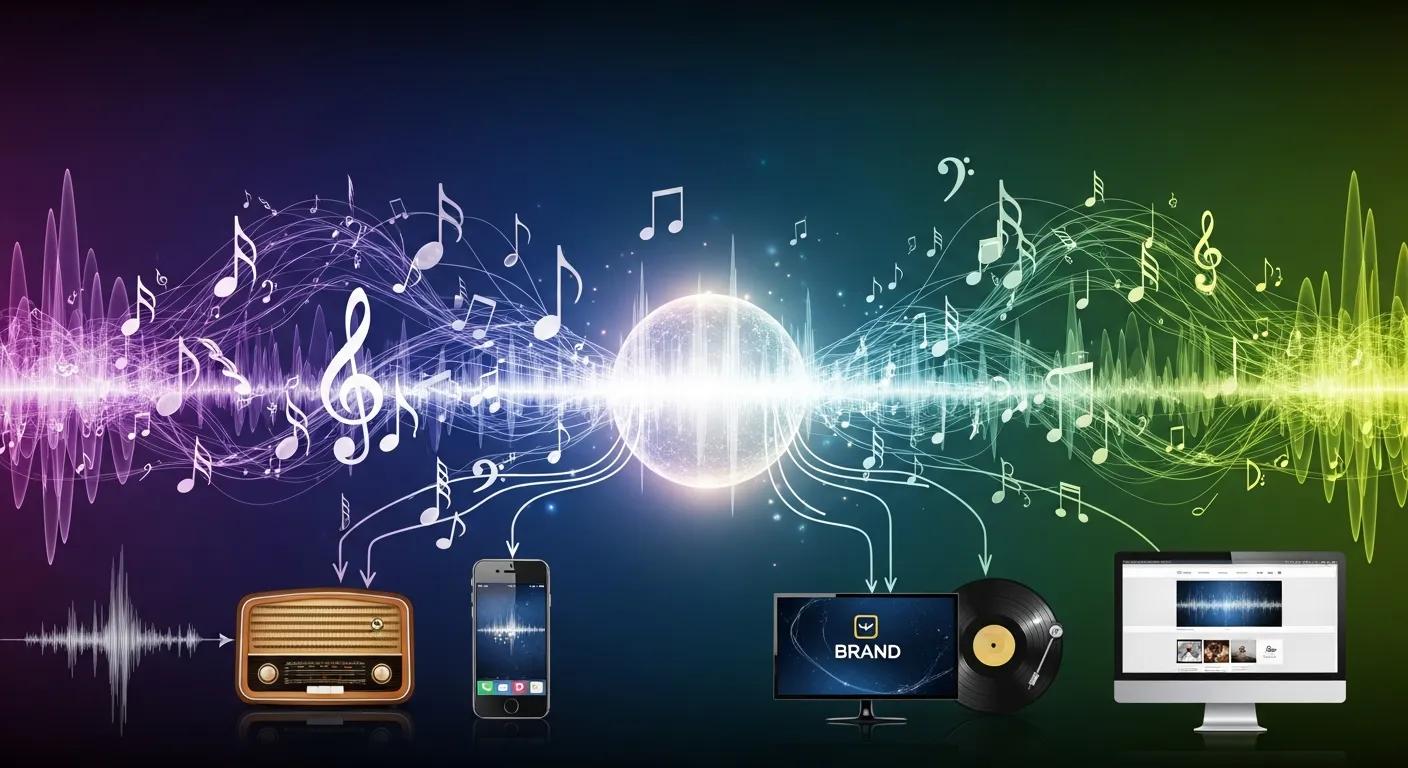
Sonic branding elements including a radio, smartphone, TV, and vinyl record with musical notes and sound waves, illustrating brand audio identity across platforms.

A unified sonic branding strategy is built from a set of standardized elements and governance rules that ensure a consistent brand sound across touchpoints and production cycles. Core components include a concise sonic logo, extended brand music themes, a defined voiceover style, sonic arrangement rules, and a governance playbook covering file specs, versioning, and licensing. Together, these components form a brand sound architecture that teams can reuse and adapt without losing identity.

The right balance of fixed motifs and flexible arrangements allows brands to scale audio across formats while retaining recognition. The following EAV table lays out these components, attributes, and platform suitability to guide implementation.

ComponentPrimary AttributeTypical Platform Suitability
Sonic LogoPurpose: Instant recognition; Duration: 1–3sSocial, app, pre-roll, on-hold
Brand MusicPurpose: Emotional backdrop; Duration: 15–60sTV, radio, long-form video, events
Voiceover StylePurpose: Personality and clarity; Attribute: tone/timbreRadio, TV, podcasts, ads
Sound Effects (SFX)Purpose: Transitions and emphasis; Attribute: textureVideo, ads, interactive experiences

This comparison clarifies how each component contributes to a unified brand sound and which platforms benefit most from specific assets. The following subsection dissects the defining elements to help teams assign production attributes and durations.

Which Elements Define a Consistent Sonic Identity?

A consistent sonic identity is defined by melodic motifs, instrumentation choices, vocal characteristics, arrangement rules, and mix/master specifications that are documented and enforceable. Melodic motifs include the melodic contour and the hook interval, which should remain intact across all variations. At the same time, instrumentation palettes ensure timbral consistency—e.g., organic strings versus synthetic voices and textures. Voiceover style defines vocal gender range, delivery speed, and emotional tone so narrations feel like they come from the same brand voice. Production attributes—tempo range, key centers, and loudness targets—complete the specification so mixes translate predictably across platforms. Defining these elements precisely makes it easier for producers and agencies to recreate assets accurately and reduces creative drift over time.

How Do Audio Branding Guidelines Support Cross-Channel Consistency?

Audio branding guidelines serve as a governance manual that specifies usage rules, file formats, version naming, licensing terms, and approval workflows, enabling teams to scale consistent sonic assets. A robust guideline includes examples of permitted variations, stem delivery requirements, loudness and EQ targets, and a clear approval matrix for who signs off on new adaptations. Implementation often uses centralized asset libraries with version control and explicit metadata to prevent outdated files from reentering campaigns. Governance workflows should also specify training and periodic audits to ensure continued adherence. These operational controls enable consistent execution at scale and prepare teams to measure outcomes using stable, repeatable assets.

How Can Jingles Be Integrated Effectively Across Multiple Platforms?

Integrating jingles effectively requires treating them as modular assets: the core hook is preserved while stems, durations, and arrangements are adapted to platform constraints and audience behavior. A modular approach uses full-length jingle masters, stem files for music/voice/SFX, and short logo edits that maintain melodic contour. Production notes should include recommended lengths, key edits for cutdowns, and mix approaches for compressed streaming environments. Distribution requires clear file naming, multiple format exports (stereo, mono, AAC/MP3), and loudness targets for each platform.

The table below shows jingle adaptations per platform with production notes.

PlatformAdaptation TypeRecommended Length & Production Notes
RadioFull jingle and 30s cutHook placement in first 3s; clear vocal lead; radio loudness targets
TV/VideoStems for post-syncProvide instrumental stems and sync points; maintain dialogue clarity
SocialMicro-variants/sonic logo1–3s logos, vertical mix considerations, compressed codecs
Podcast/On-holdIntro/outro jinglesLoopable stems, low-bitrate friendly mixes, seamless fades

This practical mapping helps producers decide which assets to deliver and how to prepare stems for different uses. The following subsection provides channel-specific best practices and examples for adaptation.

What Are Best Practices for Jingle Adaptation on Radio, TV, and Social Media?

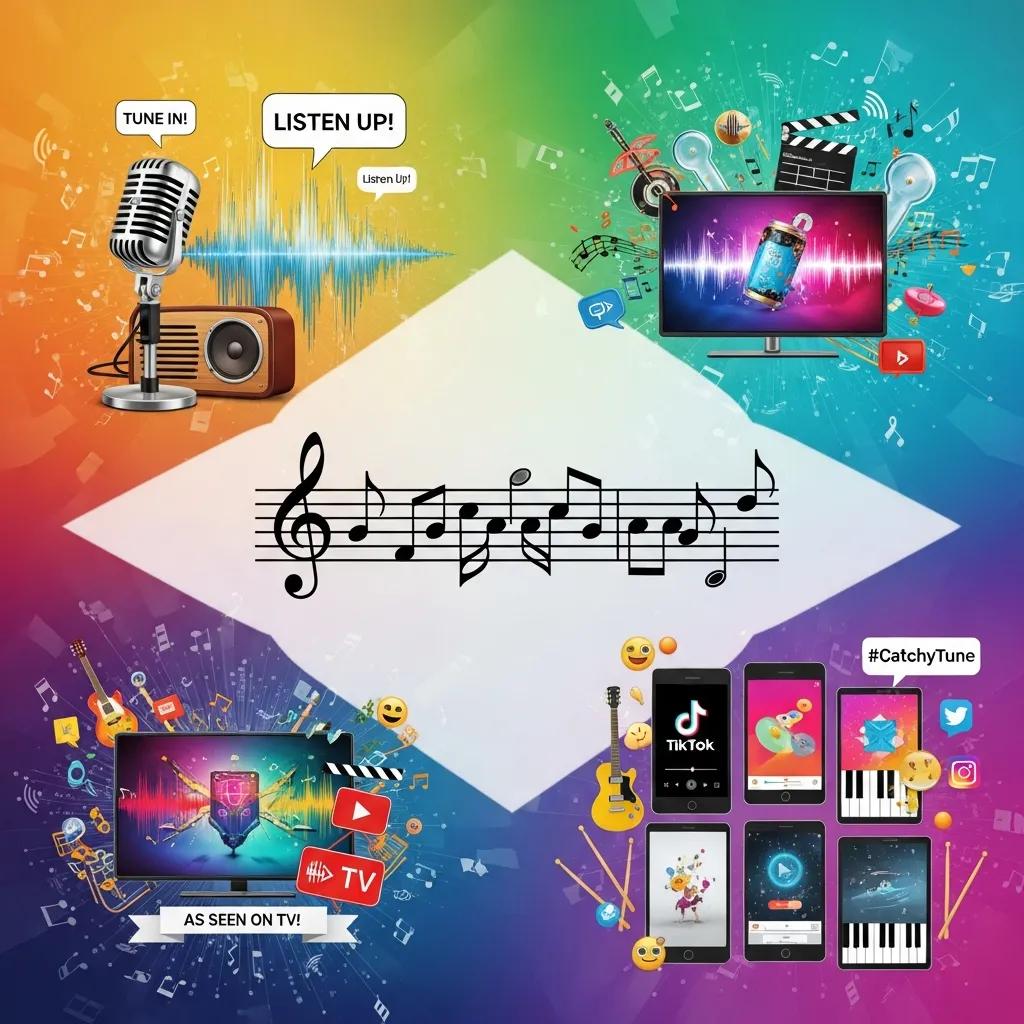
Colorful collage illustrating jingle adaptations for radio, TV, and social media, featuring microphones, musical notes, and devices with social media icons, emphasizing audio branding and catchy tunes.

Adapting jingles across radio, TV, and social requires tailoring duration, arrangement, and mixing while preserving the jingle’s melodic identity. For radio, prioritize hook clarity in the first three seconds, compress judiciously for FM/AM pipelines, and position the vocal or tagline where it survives typical ad-skips. For TV and video, deliver stems and explicit sync markers so editors can match visual cues without altering melodic content, and use a wider dynamic range with broadcast loudness compliance. For social, create micro-variants that emphasize the sonic logo and mix for loud, small-device playback with heavy codec compression. Prepare clear production notes and reference masters to ensure each adaptation remains recognizably part of the same unified brand audio.

How Does Custom Jingle Creation Enhance Cross-Channel Marketing Impact?

Custom jingles deliver distinct melodic hooks and bespoke instrumentation that set brands apart from stock tracks and create stronger associative memory across channels. A custom jingle provides flexibility for targeted sub-versions—regional language edits, campaign-specific lyrics, or seasonal arrangements—while retaining a core sonic identity for recognition. Case-style examples from national campaigns show that bespoke melodic hooks increase ad recall and emotional attachment more than generic music beds. Custom creation also clarifies licensing and ownership choices, enabling brands to choose exclusive usage or structured licensing for partners and franchises. Choosing custom production supports long-term consistency because the core motif is owned and controlled, enabling consistent adaptation across platforms.

For organizations ready to explore bespoke jingle strategies, Cary Reich, The Jingle Writer, composes custom jingles and audio branding elements suited for radio, TV, social media, website videos, and on-hold messaging, and offers ownership or licensing options. Production turnaround options accommodate typical needs, with standard timelines around 2–3 weeks and expedited delivery in 2–3 days for urgent projects. If you want to discuss how a tailored jingle can fit your multi-platform strategy, schedule a free consultation.

What Challenges Arise in Maintaining Audio Branding Consistency Across Platforms?

Maintaining audio branding consistency faces technical constraints, creative drift, and organizational fragmentation that can dilute sonic identity if not proactively managed. Technical issues include varying loudness standards, codec compression, and device playback differences that alter timbre and perceived balance. Creative drift occurs when teams permit too many unofficial variations, eroding the melody or vocal tone that listeners associate with the brand. Organizationally, inconsistent asset repositories, unclear approvals, and poor metadata make it easy to deploy outdated masters. The following list outlines typical challenges and high-level mitigations teams should adopt to reduce inconsistency risk.

Common challenges and mitigations include:

  1. Platform technical variance: mitigate with platform-specific stems and loudness/compression guidelines.
  2. Creative drift: mitigate through strict brand audio guidelines and periodic asset audits.
  3. Organizational gaps: mitigate with centralized asset libraries and clear approval workflows.

Addressing these areas reduces deployment errors and preserves the brand’s sonic integrity across channels.

How Do Platform Variations Affect Brand Sound Uniformity?

Platform variations alter perceived audio through differences in loudness normalization, compression artifacts, channel layouts, and listener environments, which can shift tonal balance and affect recognition. For example, heavy codec compression on social platforms can obscure midrange vocal clarity, while on-hold phone systems may attenuate low frequencies and require EQ compensation. The recommended mitigation is to produce platform-specific stems and reference mixes that anticipate codec behavior and device playback—providing both complete masters and optimized micro-variants. Including loudness targets and EQ notes in the asset metadata ensures that adaptations preserve the core melodic and timbral cues listeners rely on for recognition. These technical safeguards feed into governance strategies that enforce consistent use.

What Strategies Ensure Adherence to Brand Audio Guidelines?

To enforce adherence, establish clear ownership for audio assets, a documented approval workflow, and an accessible central repository with versioning and metadata to control distribution. Assign roles for who can approve new variations and require sign-off for any adaptation that changes melody, instrumentation, or vocal character. Use periodic audits and training sessions for creative teams and agencies so everyone knows the acceptable palette of variations and how to request exceptions. Asset management tooling—complete with naming conventions, stems, and reference masters—reduces accidental use of outdated files. Combining governance, tooling, and people processes ensures consistency persists as the brand scales its multi-platform presence.

How Can You Measure the Success of Your Multi-Platform Audio Branding Efforts?

Measuring audio branding success requires blending qualitative recall testing with quantitative engagement metrics to capture both recognition and behavioral impact. Primary KPIs include brand recall scores from pre/post surveys, recognition rates in passive listening tests, engagement metrics like ad play-through and CTR where audio is a variable, and sentiment or preference lift from A/B audio tests. Measurement methods range from short-panel surveys and ad lab tests to analytics from streaming platforms that show completion rates and click behavior. Establishing baselines and running controlled experiments helps teams determine which audio elements drive recall and which arrangements optimize conversion. The EAV table below maps key KPIs to measurement methods and suggested tracking cadences.

KPIMeasurement MethodSuggested Cadence
Brand RecallPre/post surveys and aided recall testsQuarterly or per campaign
Recognition RatePassive audio recognition panelsMonthly during campaigns
EngagementPlay-through, CTR, conversion analyticsPer campaign, real-time dashboards
Sentiment/PreferenceA/B audio tests and focus panelsPer major creative iteration

This KPI mapping equips teams to track both cognitive and behavioral outcomes and to iterate on audio assets based on evidence. The next subsection lists specific KPIs and how to collect them in practice.

Which Key Performance Indicators Reflect Brand Recall and Customer Engagement?

KPIs that reflect audio brand performance include aided and unaided recall percentages, recognition latency (time to identify the brand after hearing the motif), engagement metrics such as ad completion rate and CTR, and preference or sentiment shifts measured through tests. Aided recall surveys measure whether listeners link the melody to the brand when prompted, while passive recognition panels measure identification without prompts, offering a stricter test of recognition. Engagement metrics can be instrumented via analytics platforms that track play-through and user interactions with audio-enabled ads. Combining these KPIs with a testing cadence enables teams to see both immediate campaign effects and longer-term shifts in brand recognition.

How Do Analytics Inform Continuous Improvement of Unified Brand Audio?

Analytics inform improvement by revealing which audio variants produce higher recognition, engagement, and conversions, enabling data-driven decisions about melody tweaks, voiceoverment choices, or voiceover changes. Iterative methods include A/B audio tests in live campaigns, controlled lab tests for recall, and qualitative panels for emotional resonance—each informing different aspects of the sonic identity. Close the feedback loop by translating insights into updated asset briefs, new stems, or refreshed sonic logos, and track the impact of changes using the KPIs outlined earlier. Routine review cycles turn analytics into actionable production priorities, ensuring the unified brand audio evolves while preserving core identity.

Why Choose Cary Reich, The Jingle Writer, for Your Multi-Platform Audio Branding Needs?

Cary Reich, The Jingle Writer, specializes in voiceover composition, voiceover, and comprehensive audio branding services tailored for multi-platform deployment and a consistent brand sound architecture. The practice has produced memorable melodies for national brands and delivers customizable ownership or licensing arrangements to fit campaign and budget needs. Production capabilities include access to top recording talent across the country, enabling high-quality recordings and flexible arrangements appropriate for radio, TV, social, podcasts, and on-hold messaging. Turnaround options support typical production schedules, with standard delivery in 2–3 weeks and expedited delivery in 2–3 days for projects that require speed.

This business capability supports the multi-platform strategies described earlier by coupling creative ownership with practical production workflows, making it easier for brands to maintain control and consistency across channels. The following subsection summarizes the expertise and experience derived from the available information.

What Expertise and Experience Does Cary Reich Bring to Audio Branding?

Cary Reich brings experience in jingle composition and a portfolio that includes work for national brands—evidence of expertise in creating highly memorable melodic hooks and production-ready masters. The service offering covers custom jingles for radio and TV, social media ad themes, website video music, on-hold messaging, and voiceover services that ensure consistent vocal character across assets. Clients may select outright ownership or structured licensing, which clarifies long-term control and reuse for multi-platform campaigns. Access to a national network of recording talent allows tailored vocal and instrumental choices that align with brand palettes while maintaining production quality across deliverables.

How Does Scheduling a Free Consultation Kickstart Your Unified Brand Sound?

A free consultation begins with an auditory audit and scoping conversation to identify gaps in existing assets, prioritize platforms, and outline a phased plan for sonic identity creation or consolidation. Typical outcomes include recommended core assets (sonic logo, masters, stems), a proposed governance checklist for file specs and approvals, and a timeline for production and deployment across priority channels. That initial conversation is designed to align on objectives and to model how custom jingles and brand music can be adapted to the platforms that matter most. Schedule a free consultation.

Frequently Asked Questions

What are the common pitfalls in audio branding that brands should avoid?

Common pitfalls in audio branding include inconsistent use of audio elements, neglecting platform-specific adaptations, and failing to document audio guidelines. Inconsistency can lead to confusion among consumers, diluting brand recognition. Additionally, failing to adapt audio for different platforms can result in poor audio quality or misalignment with audience expectations. Lastly, without clear documentation, teams may create unauthorized variations that stray from the brand’s sonic identity. Establishing strict guidelines and regular audits can help mitigate these issues.

How can brands ensure their audio branding resonates with diverse audiences?

To resonate with diverse audiences, brands should consider cultural nuances and preferences in their audio branding strategy. This includes using inclusive language, diverse voice talent, and music styles that reflect the target demographic’s tastes. Conducting audience research and testing different audio elements can provide insights into what resonates best. Additionally, creating adaptable audio assets that can be localized or modified for different markets ensures that the brand sound remains relevant and appealing across various cultural contexts.

What role does emotional connection play in audio branding?

Emotional connection is crucial in audio branding as it influences consumer perception and loyalty. Music and sound can evoke feelings and memories, making them powerful tools for creating brand associations. A well-crafted sonic identity can enhance emotional engagement, thereby strengthening brand affinity. Brands can leverage this by using melodies that resonate emotionally with their audience, ensuring that their audio branding not only communicates the brand message but also fosters a deeper connection with listeners.

How can brands effectively manage their audio assets across multiple platforms?

Effective management of audio assets across multiple platforms involves creating a centralized asset library with precise version control and metadata. This ensures that all team members have access to the latest approved audio files, reducing the risk of outdated or inconsistent assets. Implementing a governance framework that includes guidelines for usage, adaptation, and approval processes is also essential. Regular training sessions can help keep teams informed about best practices and the importance of maintaining audio branding consistency.

What are the best methods for testing audio branding effectiveness?

Testing the effectiveness of audio branding can be achieved through a combination of qualitative and quantitative methods. Qualitative methods include focus groups and interviews to gather feedback on emotional resonance and brand recall. Quantitative methods involve surveys that measure aided and unaided recall, as well as engagement metrics such as click-through rates and ad completion rates. A/B testing different audio variations in live campaigns can also reveal which elements drive better performance, enabling brands to refine their audio strategy based on data.

How can brands adapt their sonic identity for emerging platforms and technologies?

To adapt their sonic identity for emerging platforms and technologies, brands should stay informed about trends in audio consumption and user behavior. This includes understanding the unique characteristics of new platforms, such as voice-activated devices or social media audio features. Brands can create flexible audio assets that can be easily modified for different formats and contexts. Regularly reviewing and updating audio branding strategies to incorporate new technologies ensures that the brand remains relevant and engaging in a rapidly evolving landscape.