
How to Build an Effective Audio Branding Strategy That Delivers Lasting Brand Impact
Audio branding is the intentional use of sound to communicate who you are as a brand. It works by encoding brand traits into brief, memorable sonic cues—melody, timbre, rhythm, and voice—that boost recognition and emotional response. When you translate visual and verbal values into a consistent sonic system, your brand becomes easier to remember and more emotionally resonant, which drives measurable business outcomes. Many teams underestimate the impact of sound on memory and mood, leaving gaps that weaken campaigns across radio, streaming, apps, and voice assistants. This guide defines audio branding, outlines the core parts of a sonic identity, and walks through a practical, step-by-step process for crafting components, producing, deploying, and measuring your brand sound. You’ll also find templates for an auditory persona, a prioritized checklist of audio touchpoints, production tips for jingles and sound logos, governance best practices, and KPIs to quantify audio branding ROI. Throughout, we use terms like sonic identity plan, sound logo, jingle writing, and audio touchpoints to help you turn ideas into an actionable audio branding strategy.
What Is Audio Branding and Why Is It Essential for Your Business?
Audio branding uses melodies, stings, voice, and ambient textures to express your brand’s personality and trigger recognition. By repeating a sonic signature in the right contexts, short audio cues can prompt recall the same way a logo or color does. Research shows well-designed sound cues increase ad recall and emotional engagement, improving conversion outcomes across paid and organic channels. A clear sonic identity also reduces listeners’ cognitive load—consistent audio signals speed up and sharpen brand recognition. Learning how sound maps to memory and feeling is the first step toward assets that produce measurable brand lift and deeper customer loyalty.
How Does Audio Branding Enhance Brand Recognition and Emotional Connection?
Audio branding creates compact auditory markers that the brain stores as retrieval cues and pairs them with emotions through repeated exposure. Melodic hooks and short sound logos facilitate recognition in noisy environments, while voice tone and harmonic language shape listeners’ attitudes and trust. Neurocognitive and marketing studies show consistent sonic cues raise recall rates and strengthen the association between brand traits and feelings. For example, a bright major-key sting with a lively voice suggests approachability and optimism; a low-register sound logo with rich orchestration signals heritage and trust. Those cognitive and emotional effects are why a sonic identity plan is a strategic asset for brands pursuing deeper audience relationships.
What are the Core Elements of a Sonic Identity?
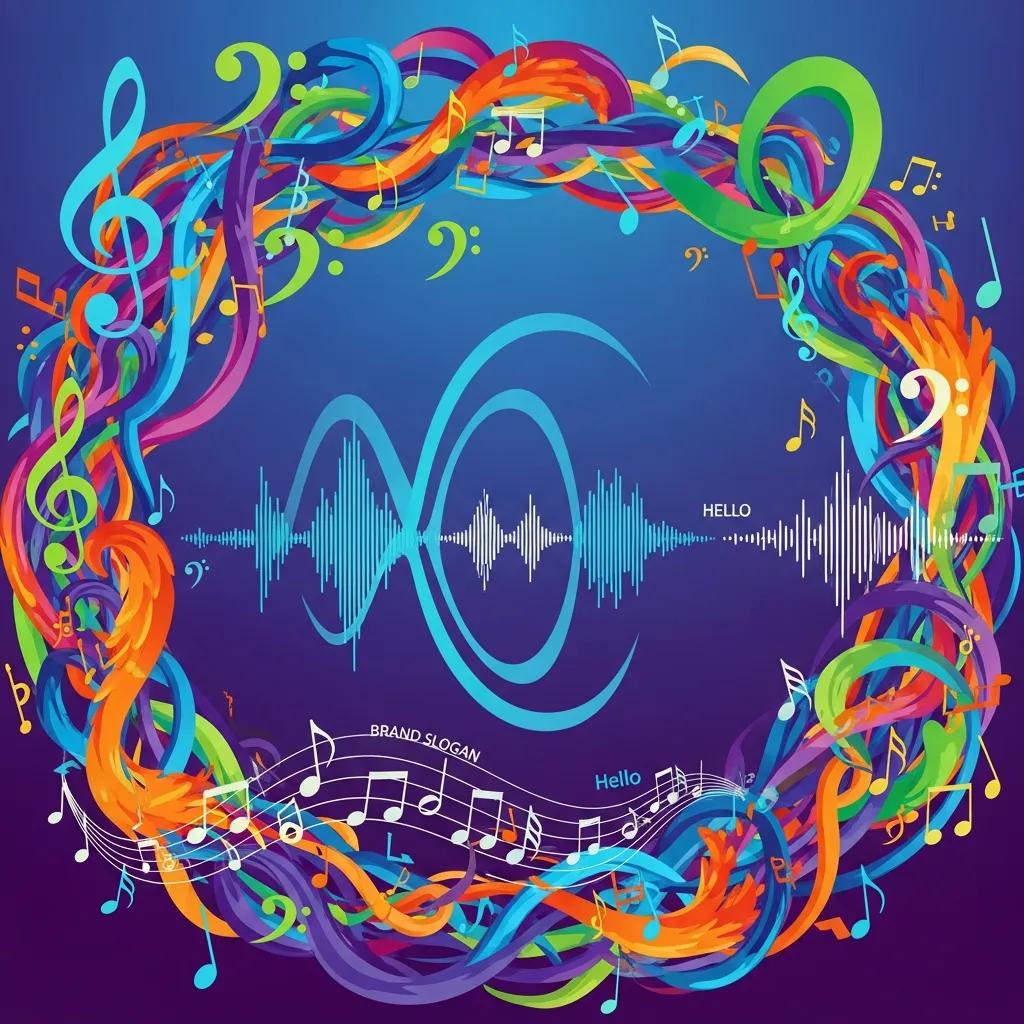
A sonic identity groups discrete audio components—sound logos, jingles, brand music, voice, and UX micro-sounds—into a unified system that signals brand traits across channels. Each element has a role: sound logos deliver instant recognition, jingles carry lyrical messages, brand music sets mood and pacing, voiceovers convey personality and clarity, and UX sounds support micro-interactions. Designing them means choosing instrumentation, tempo, harmonic language, and vocal character that reflect adjectives like “approachable,” “innovative,” or “reliable.” When melody, string, and vocal performance, along with mix/master rules, are combined into a sonic style guide, they create a coherent auditory experience that supports the broader brand strategy.
How to Create a Comprehensive Audio Branding Strategy: Step-by-Step Guide
A strong audio branding strategy follows five stages: discover, define, create, deploy, and measure. Discovery gathers brand attributes, audience insights, and a touchpoint inventory to form a sonic brief. Definition translates adjectives into musical and vocal directions. Creation produces assets and prepares masters for platform requirements. Deployment maps assets to prioritized channels and sets governance rules. Measurement tracks KPIs and feeds iterative refinement. This staged approach ensures your sonic identity grows from strategic intent rather than ad-hoc choices, improving cross-channel cohesion and ROI. Below is a concise checklist teams can use to operationalize a sonic identity.
- Conduct discovery research and inventory audio touchpoints for prioritized impact.
- Develop a sonic brief that maps brand adjectives to musical, rhythmic, and vocal attributes.
- Produce core assets (sound logo, brand music, jingles, voiceover packages) with mix/master deliverables for each platform.
- Create rollout and governance guidelines, then deploy assets across channels with A/B tests.
- Measure brand lift, recognition, engagement metrics, and iterate based on results.
This stepwise structure clarifies responsibilities and expected outputs at each stage, helping teams coordinate producers, agencies, and internal stakeholders. If you need external support to implement these stages, schedule a free consultation to get started with your audio branding work. That session starts with a discovery to align the audio strategy with your brand priorities.
This process-to-deliverable table clarifies where each sonic asset fits and what stakeholders should expect at each stage. Following these deliverables reduces rework and keeps production aligned with the defined auditory persona.
How to Dethe fine Your Brand’s Auditory Persona and Target Audience?
Start by mapping three core brand adjectives to musical and vocal attributes, then validate those choices against audience preferences and listening contexts. Translate traits like “confident,” “friendly,” or “modern” into tempo ranges, instrumentation, harmonic complexity, and vocal timbre. Layer in audience demographics and psychographics—age, typical listening contexts, and device habits—to prioritize elements that will resonate. Produce a sonic brief with reference tracks, target vocal profiles, tempo ranges, and a short direction script. That brief becomes the central guide for composers, producers, and casting directors so assets consistently reflect the intended personality.
Which Keythe Audio Touchpoints Should You Identify and Utilize?
Identify touchpoints by frequency and impact to prioritize the places where a sonic identity delivers the most value. Typical high-impact touchpoints include advertising (radio and streaming ads), on-hold and IVR systems, website and app launch sounds, social videos, and smart speaker responses—each with different context and length requirements. Focus first on touchpoints that intersect key customer journeys, such as pre-purchase awareness and post-purchase support, and design short, repeatable cues for high-frequency interactions. Test stings and voice variants in priority channels to collect early recognition and emotional-response data, then expand to lower-frequency touchpoints once core assets are stable.
- High-priority touchpoints are those with frequent exposure and decision influence.
- Platform context dictates asset length: 2–3-second stings for smart speakers, 15–30-second jingles for ads.
- Testing should begin with channels that deliver both reach and measurable conversion signals.
Right-touchpoint selection and rollout sequencing reduce wasted production effort and accelerate measurable brand lift across the most consequential interactions.
What are the essential sonic assets in Audio Branding?
Sonic assets are the tangible outputs of an audio branding strategy: sound logos, jingles, brand music, voiceover packages, and UX micro-sounds—each optimized for context and length. Sound logos are short stings for instant recognition; jingles pair melody and lyric to deliver messaging; brand music creates extended mood; voiceovers convey information and personality; UX sounds handle micro-interactions. Production considerations include length and format, instrumentation choices aligned with brand adjectives, casting for archetypal vocal roles, and mastering to platform loudness standards. Clear ownership and licensing terms are essential to avoid rights issues as brands reuse and adapt assets.
This comparison helps you decide which assets to commission based on distribution plans and listener context. Selecting the right formats up front reduces rework and ensures assets are immediately usable across prioritized touchpoints.
How to Create Memorable Jingles That Reflect Your Brand?
Make memorable jingles by centering a concise melodic hook, plain-language lyrics, and vocal casting that matches your auditory persona. Use a three-part approach: a hook (3–7 seconds), a supporting phrase that reinforces the hook, and a closing sonic tag that leads into the sound logo. Keep lyrics simple and rhythmic, so they’re easy to recall. Cast a vocalist whose timbre embodies the brand and record multiple takes for edit flexibility. In production, prioritize a clear hook and a mix that survives compression and short-form placements.
What Role Do Sound Logos, Brand Music, and Voiceovers Play?
Sound logos, brand music, and voiceovers serve different but complementary roles: sound logos deliver instant identifiability, brand music sets emotional context and pacing, and voiceovers communicate information and personality. Use a sound logo as punctuation at the start or end of media, deploy brand music for longer-form storytelling, and reserve voiceover packages for instruction or persuasion. Cohesion comes from shared timbral choices—common instrumentation or harmonic motifs—and rules about when to layer voice over music versus when to use dry voice. Refer to the asset table to align decisions on length and format with each role.
For custom composition or professional voiceover casting, Cary Reich, The Jingle Writer, offers bespoke jingle writing and voiceover services and can provide qualified recording talent and delivery options that match your rollout timeline.
How to Ensure Consistency and Adaptability in Your Audio Branding Implementation?
Balance consistency with platform-specific adaptation using a sonic style guide, versioning rules, and centralized asset distribution. A sonic style guide documents logo stings, key melodies, tempo ranges, approved vocal timbres, and loudness targets so every producer applies the same constraints. Versioning rules specify when to create adaptations—shortenings, instrumental variants, or localizations—and who can authorize them. A centralized asset library, with labeled stems and documentation, helps teams access the correct files and prevents misuse. Run quality-control checks during rollout—such as sample listening tests and automated loudness verification—to keep the identity intact across channels.
What Are the Best Practices for Applying Audio Assets Across Multiple Channels?
Apply audio assets using documented dos and don’ts, and normalize files to platform standards to preserve perceived loudness and clarity. Do use the sound logo as a consistent tag, provide voiceover scripts with delivery notes, and prepare channel-specific edits (shorter versions for social). Don’t alter melodic hooks, layer conflicting motifs, or distribute low-quality masters that hurt recognition. Technical best practices include loudness normalization, clear file naming conventions, and deliverable packs with stems and metadata for each channel. Templates for file types, codecs, and loudness targets speed handoffs and maintain fidelity across broadcast and digital environments.
- Do provide stems and metadata for each deliverable.
- Do normalize masters to platform loudness specifications before distribution.
- Don’t repurpose mastered mixes for alternate formats without providing appropriate stems.
These practical rules reduce friction between creative production and deployment teams and support consistent brand perception.
How to Adapt Your Sonic Identity for Different Platforms and Audiences?
Keep core motifs intact while tailoring arrangement, duration, and voice to context and platform. Use condensed stings (2–3 seconds) for smart speakers and push notifications, 6–10-second edits for short-form social, and full 15–30-second jingles for broadcast and streaming ads. For different audiences, vary the instrumentation, tempo, or vocal age and gender while retaining a common melodic or harmonic motif for recognizability. Localization may require lyric translation and culturally relevant instrumentation, but preserve the sonic logo or harmonic family to maintain cross-market association. Test variants with representative audience segments to ensure adaptations keep the intended emotional effect and recognition.
What are the Measurable Benefits and ROI of an Effective Audio Branding Strategy?
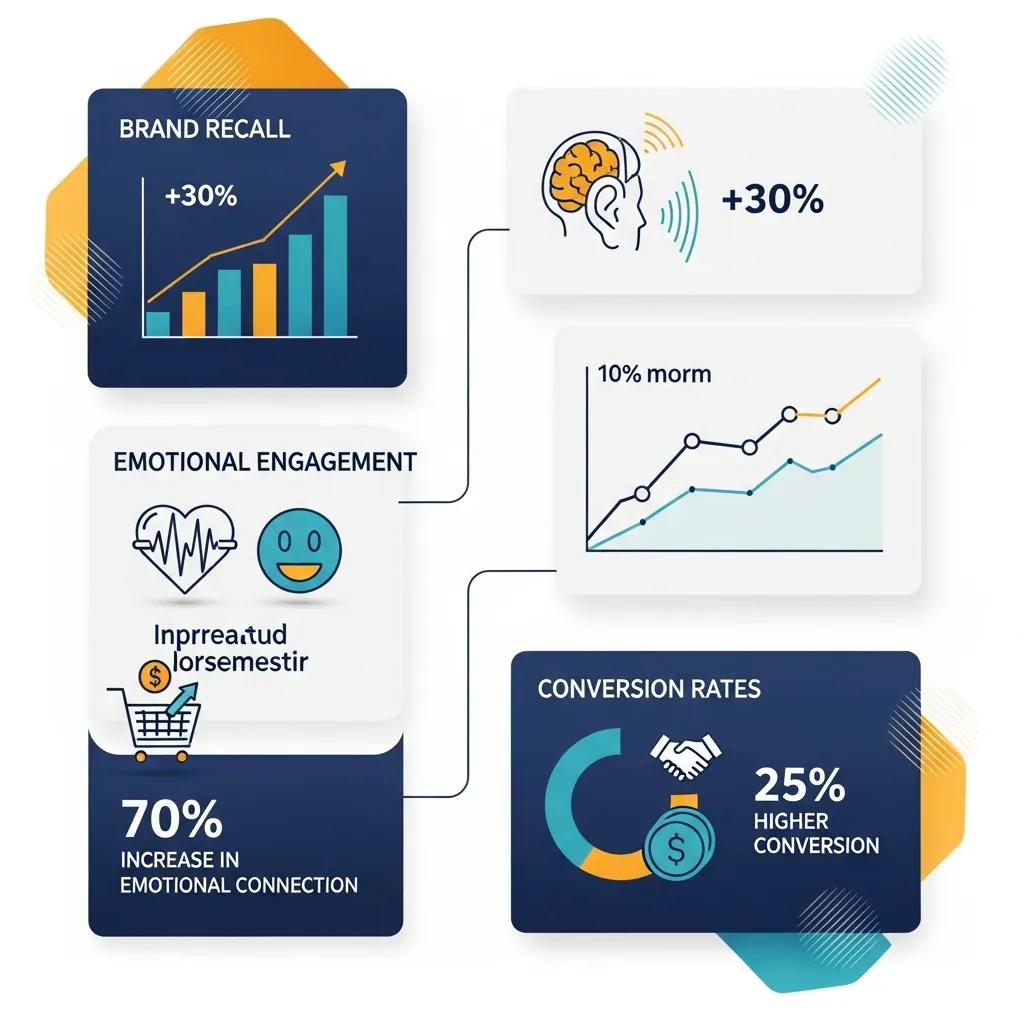
An effective audio branding strategy delivers measurable gains: improved brand recall, stronger emotional engagement, higher ad lift, and better conversion rates versus control conditions. Audio cues speed recognition and lift recall in A/B tests and brand-lift studies, and consistent sonic identities correlate with stronger loyalty signals over time. Useful KPIs include aided and unaided brand recall, recognition rate during exposures, engagement on audio-led campaigns, conversion lift, and retention tied to touchpoint frequency. The table below compares common assets and the outcomes they typically influence to help estimate impact and prioritize investment.
This asset-focused comparison helps you prioritize which elements to commission first based on the outcomes you need—recall, recognition speed, engagement, or conversion—and gives a framework for estimating ROI through targeted measurement.
How Does Audio Branding Improve Brand Recall and Customer Loyalty?
Audio branding improves recall by creating compact retrieval cues that the brain links to brand meaning, and it strengthens loyalty by repeatedly pairing those cues with positive experiences. Memory encoding is stronger when an auditory signature accompanies meaningful brand moments, increasing the chance of recall when it matters. Practical measurement options include A/B tests that swap audio while keeping visuals the same, post-exposure brand-lift surveys, and longitudinal retention studies that correlate exposure frequency with loyalty. Recent analyses report measurable gains in ad recall and emotional metrics when brands apply tailored sonic identities consistently.
Which Metrics and KPIs Should You Track to Measure Success?
Track a blend of research and behavioral KPIs: aided and unaided recall, recognition rates in controlled exposures, ad lift scores, engagement metrics (video completion, time on site), and conversion lift for audio-enabled campaigns. Use surveys, analytics platforms, and controlled experiments to gather data, and set baseline targets for short-term (3–6 months) and medium-term (6–18 months) evaluation. Monitor engagement monthly and run quarterly brand-lift studies to spot trends in recall and recognition. A clear measurement plan with attribution rules makes audio’s contribution to outcomes visible and actionable.
- Primary KPIs: aided recall, recognition speed, ad lift.
- Secondary KPIs: engagement rates, conversion lift, retention.
- Measurement methods: A/B audio tests, brand lift surveys, and analytics tracking.
Regular review cycles tied to these KPIs enable iterative refinement of sonic assets and deployment strategies.
Why Partner with an Expert Like Cary Reich for Your Audio Branding Success?
Cary Reich, The Jingle Writer, offers custom jingle writing, voiceover, and full audio branding services that align creative production with strategic goals. The approach is client-focused—avoiding a one-size-fits-all sound—while tapping a broad pool of recording talent, including Broadway-caliber performers and nationwide voice professionals, to match vocal choices to brand personas. Flexible ownership and licensing options let brands pick the rights model that fits their distribution needs. Typical production timelines are 2–3 weeks, with expedited 2–3 day options when rapid turnaround is required. These service attributes help teams choose a partner who can deliver high-quality sonic assets on realistic schedules.
What Unique Value Does Cary Reich Bring to Audio Branding Strategy Development?
Cary Reich brings several distinct strengths to audio branding projects: a proven track record in jingle composition and audio branding, a client-centered creative process that avoids a generic “house” sound, access to experienced recording and voice talent, flexible ownership and licensing structures, and delivery timelines that typically run 2–3 weeks with expedited 2–3 day options. Those capabilities provide practical production flexibility and tailored creative outcomes for teams commissioning sonic assets.
How to Schedule a Free Consultation to Start Your Audio Branding Journey?
Schedule a free consultation to begin your audio branding journey. The session starts with a brief discovery conversation to align on brand priorities, target audience, and high-impact touchpoints, followed by recommended next steps and an outline of deliverables. To prepare, gather three brand adjectives, any existing audio assets, and a prioritized list of channels where you want voice, music, or jingles to appear. Expect the consultation to clarify scope, timelines, and licensing so you can decide on an engagement that supports your strategic goals.
Frequently Asked Questions
What are the common challenges businesses face when implementing an audio branding strategy?
Common challenges include a lack of full understanding of how sound influences behavior, which can lead to ineffective audio assets; maintaining consistency across platforms; limited budgets that constrain production quality; and insufficient testing and measurement to demonstrate impact. Overcoming these issues takes a strategic plan, clear governance, and a commitment to ongoing testing and optimization.
How can businesses measure the effectiveness of their audio branding efforts?
Measure audio branding with both qualitative and quantitative indicators: brand recall rates, engagement during audio-led campaigns, and conversion rates tied to audio touchpoints. Run A/B tests to compare audio variants and use brand-lift studies to see how audio influences perception and loyalty over time. Regular metric reviews let you make data-driven adjustments to your audio strategy.
What role does audience research play in developing an audio branding strategy?
Audience research is essential. It identifies preferences, listening contexts, and emotional triggers so you can tailor your sonic identity to resonate with your audience. Demographics and psychographics inform choices around musical style, vocal characteristics, and which touchpoints to prioritize. Surveys and focus groups provide feedback that ensures your audio aligns with audience expectations.
How can bthe rands ensure their audio branding is culturally relevant?
To stay culturally relevant, research local musical tastes, language nuances, and social norms. Work with local artists or sound designers for authenticity, and use localization—adapt lyrics or instrumentation while keeping the same sonic logo or harmonic family. Test assets with diverse segments to confirm positive reception across markets.
What are some examples of successful audio branding campaigns?
Successful campaigns usually feature concise, memorable sound logos or jingles that become synonymous with the brand. Examples include McDonald’s “I’m Lovin’ It,” Intel’s four-note signature, Netflix’s “ta-dum,” and Apple’s product sounds—each creates strong recognition and emotional cues that enhance brand loyalty.
How can businesses adapt their audio branding for different platforms?
Adaptation means tailoring length, arrangement, and style to each platform. Use 2–3-second stings for smart speakers and notifications, and 15–30-second jingles for TV and radio. Consider listening environment—ambient music for retail, catchy hooks for social video—while keeping core motifs consistent so recognition carries across formats.
Conclusion
An intentional audio branding strategy can meaningfully boost recognition and emotional connection with your audience. By deploying sound logos, jingles, and tailored sonic assets, brands create memorable experiences that drive engagement and loyalty. Clear measurement frameworks enable prioritization of investments and demonstrate ROI. Ready to get started? Schedule a free consultation and take the first step toward purposeful audio branding.