Sound and Memory: The Connection in Cognitive Psychology
Uncover the intriguing link between sound and memory in cognitive psychology. Learn how auditory recall influences our thoughts and enhances memory retention.
CR
Cary Reich· The Jingle Writer
Jingle composer since 1985·Updated October 5, 2026·16 min read·✔ Written & produced in-house
The Link Between Sound and Memory Formation: How Music and Jingles Enhance Brand Recall and Cognitive Impact
Sound reliably shapes memory by tapping specialized auditory processing and emotional systems that encode experiences into lasting recall. Practically speaking, music and short-form jingles use melodic hooks, repetition, and emotional cues to forge strong associations between a brand and a listener’s episodic memory. This article lays out the neuroscience behind auditorymemory, explains why jingles work as mnemonic devices, summarizes recent research, and turns those insights into usable auditory branding tactics. You’ll learn how the auditory cortex, hippocampus, and amygdala cooperate to create sound memories, which compositional features boost recall, how to measure a jingle’s performance, and practical steps for commissioning a sonic identity. The coverage combines cognitive psychology and neuromarketing with tactical checklists and comparison tables, and shows how experienced practitioners turn theory into commercial results for brands.
Key Takeaways
Sound shapes memory by engaging the auditory cortex, hippocampus, and amygdala to encode and consolidate experiences.
Jingles rely on repetition, melody, and emotional hooks to form durable brand–memory links.
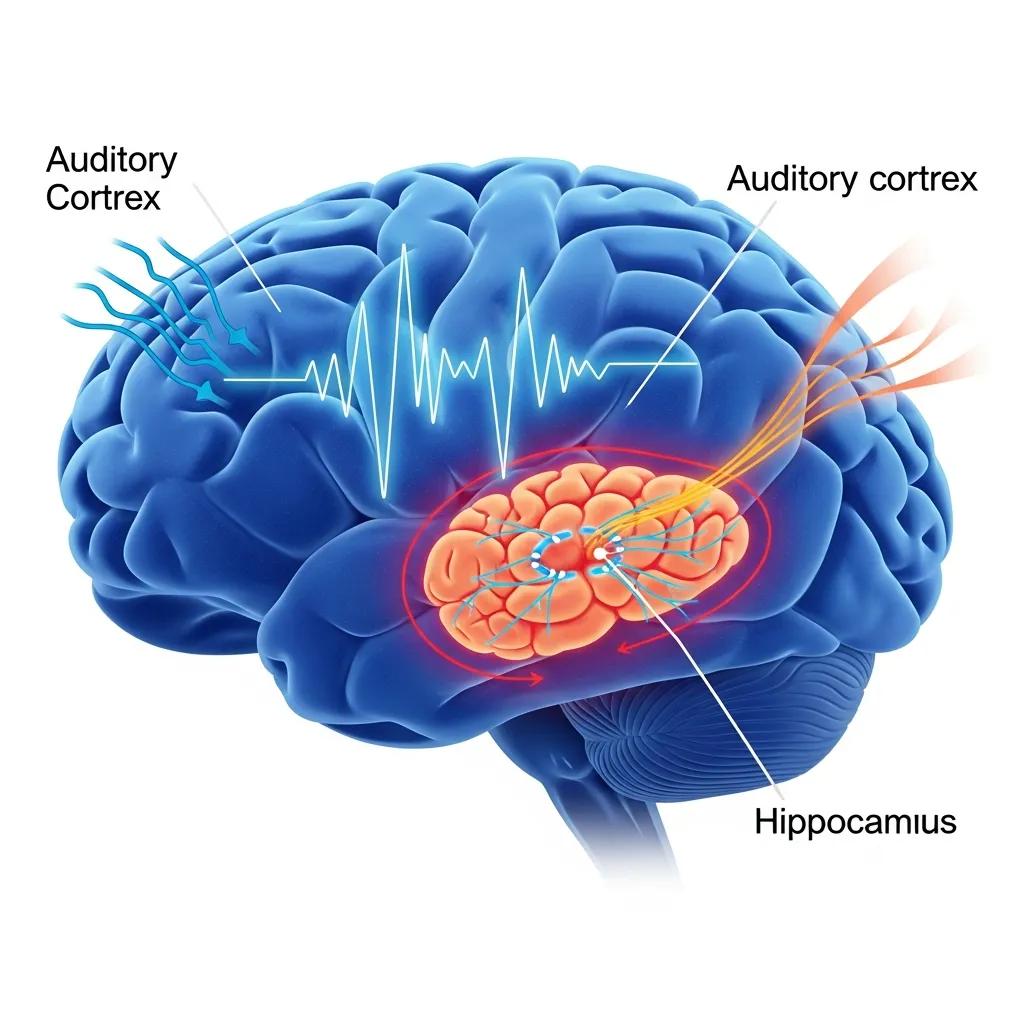
The auditory cortex processes sound features while the hippocampus binds sounds into contextual episodic memories.
Emotional tagging from the amygdala boosts consolidation and retrieval of emotionally charged sounds.
Well-timed repetition strengthens synaptic connections and improves long-term auditory retention.
Most memorable jingles use simple melodies, rhythmic phrasing, and emotional alignment with the brand persona.
Music drives neural networks and entrainment, sharpening attention and segmentation for better encoding.
Auditory branding works best when consistent sonic assets are used across channels with staggered exposure.
Measure jingle impact with recall and recognition tests plus biometric or behavioral engagement metrics.
How Does Sound Influence Memory Formation in the Brain?
Sound influences memory formation by delivering structured auditory input the brain decodes, prioritizes, and consolidates into long-term traces via neural plasticity. The auditory cortex first parses acoustic features—pitch, timbre, rhythm—then routes salient patterns to the hippocampus for episodic binding while the amygdala modulates consolidation when emotion is involved. This flow produces stronger, more retrievable memory traces for sounds with clear structure, repetition, or emotional weight. Understanding this chain explains why concise, distinctive hooks become persistent mnemonics and why emotional framing speeds recall. The sections that follow unpack the roles of the auditory cortex and hippocampus, then show how emotional systems amplify retrieval.
What Roles Do the Auditory Cortex and Hippocampus Play in Sound Memory?
The auditory cortex decodes the physical attributes of sound—spectral content, temporal patterns, and rhythm—building a representational map that recognizes melodies, timbres, and speech. The hippocampus takes those representations and binds them into contextual episodic memories, linking the sound to the moment, visuals, and meaning that enable later retrieval. Together they form a two-stage pipeline: precise sensory analysis followed by associative consolidation. For jingle designers, that means prioritizing clear melodic contours and isolated hooks the auditory cortex can quickly encode and the hippocampus can attach to brand imagery.
How Does Emotion, Mediated by the Amygdala, Strengthen Memory Recall?
Emotion signals importance: the amygdala flags emotionally charged sounds and activates consolidation pathways that boost long-term retention through amygdala–hippocampus interaction. Music creates emotion via tempo, harmony, and timbral warmth; those affective responses increase the chance a sound will be stored as a salient memory. Recent work (2023–2024) shows emotionally valenced musical cues improve recognition and speed of retrieval versus neutral sounds. In practice, adding a brief emotional pivot—an uplifting chord, a warm vocal tone, or a lyric that evokes pleasure—can noticeably raise the odds listeners remember the brand.
Research emphasizes the cooperative role of the amygdala and hippocampus in stabilizing emotional memories.
Amygdala–Hippocampus Interaction in Emotional Memory Consolidation
These brain structures act together to form long-term memories for emotionally significant events. After an emotional stimulus, the amygdala and hippocampus activate and communicate during consolidation. That dual activation and dynamic interplay likely contribute to the distinctiveness of emotional memories.
Amygdala–hippocampus dynamic interaction in relation to memory, G Richter-Levin, 2000
Why Are Jingles Effective Tools for Brand Recognition and Recall?
Jingles work as sonic mnemonics because they mix repetition, melodic simplicity, and emotional hooks to build associative networks that support both aided and unaided recall. Repetition strengthens connections; melody and rhythm scaffold echoic and auditory working memory; and emotional peaks prioritize consolidation. When these elements align, a jingle becomes an audio logo—a compact sonic cue that signals a brand across channels. Below are the core reasons jingles succeed and the practical design choices that realize them.
Repetition: Repeated exposure solidifies encoding and retrieval across contexts.
Melody: Simple, singable contours are easy for the auditory cortex to parse and for listeners to hum.
Emotional hooks: Affect increases consolidation probability through amygdala engagement.
Simplicity: Short, focused lyrics lower cognitive load and speed recall.
These mechanisms explain why concise hooks often beat longer, complex audio for quick recognition. Understanding how musical features map to memory processes guides the design choices we discuss next.
Different jingle attributes correspond to specific cognitive mechanisms and marketing outcomes; the table below outlines those relationships and their practical implications.
Jingle Element
Cognitive Mechanism
Marketing Effect
Melody (short hook)
Facilitates pattern recognition and encoding
Higher unaided recall; easier to hum and share
Repetition (spaced)
Strengthens synaptic potentiation and retrieval cues
Better attention and clarity even in noisy settings
This comparison helps designers prioritize elements based on campaign goals—memory longevity, rapid recognition, or emotional positioning. Next we examine repetition’s neural logic and what makes a jingle catchy.
How Does Repetition in Jingles Enhance Auditory Memory?
Repetition strengthens auditorymemory by reinforcing the neural circuits encoding a pattern, analogous to long-term potentiation. Spaced repetition—reintroducing a hook at intervals—balances reinforcement with reduced listener fatigue, supporting retrieval without saturating attention. Composers plan repetition across microstructure (immediate motif repeats) and macrostructure (recurring hook across ads, on-hold audio, and social clips). A practical guideline: repeat a 3–6 second hook several times across a campaign and use subtle arrangement changes to keep it fresh while preserving the potentiation benefits.
What Makes a Jingle Catchy and Emotionally Engaging?
Catchiness comes from a compact, singable melodic contour, clear rhythmic phrasing, and an emotional match between music and brand persona. Interval choices that create easy-to-sing lines, syncopation that highlights rhythmic hooks, and instrumentation aligned with the brand voice (bright timbres for energetic brands, warm timbres for trustworthy ones) all boost memorability. Lyrically, tying the brand promise to a vivid, concise phrase strengthens semantic binding. Production choices—vocal timbre, reverb, harmonic color—shape emotional resonance, so test several timbral variants to find which best evokes the target affect.
What Is the Science Behind Music’s Cognitive Effects on Memory?
Music’s cognitive effects on memory come from broad network activation, attentional capture, and entrainment phenomena that align brain rhythms with auditory structure. Music recruits the auditory cortex, prefrontal areas for attention and working memory, and medial temporal structures for consolidation, creating network states favorable for encoding. Recent 2023–2024 studies confirm rhythmic structure enhances neural entrainment and emotionally salient music drives stronger consolidation signals. The table below distills core mechanisms and practical takeaways for designers and marketers.
Mechanism
Neural Substrates
Practical Implication
Neural entrainment
Auditory cortex + motor areas
Tempo choices can boost attention and recall
Attention modulation
Prefrontal cortex
Clear musical onsets create optimal encoding windows
Emotional arousal
Amygdala–hippocampus loop
Timed emotional peaks strengthen consolidation
Cross-modal binding
Sensory association networks
Synchronized audiovisual cues increase retention
These mechanisms show tempo, onset clarity, and affective shaping are more than aesthetics—they change the odds a memory will form and be retrieved. The next sections dive deeper into entrainment and emotion-driven encoding.
How Does Music Activate Neural Networks to Improve Memory Retention?
Music activates networks spanning sensory processing, timing, and memory, aligning cortical oscillations with rhythmic patterns in a process called neural entrainment. Entrainment improves segmentation of auditory streams, making hooks easier to isolate and encode, while coordinated motor and auditory activation can deepen memory through sensorimotor coupling. Recent evidence shows tempos matching natural human rhythms (roughly 60–120 BPM) tend to maximize entrainment without overstimulation. For advertisers, choose tempo deliberately—upbeat for grabbing attention, moderate for aiding recall—to influence how well a jingle is encoded.
What Is the Relationship Between Music-Induced Emotion and Memory Encoding?
Music-induced emotion strengthens encoding by raising arousal and flagging information as salient; the amygdala then signals medial temporal structures to prioritize consolidation. Both valence (pleasant vs. unpleasant) and arousal shape retention; high-arousal positive cues often yield the best recall for commercial messages. Composers can tune mode (major/minor), harmonic movement, and dynamics to control valence and arousal. Align musical parameters with the desired brand affect so the jingle captures attention and creates an emotional state that supports long-term memory formation.
The close link between music, emotion, and personal memories is reinforced by studies examining how these elements interact to form affective experiences.
Music-Induced Emotions and Personal Memories in Affective Experiences
Music evokes emotion through several mechanisms, but how different emotions arise is complex. Research comparing music and images found interactions between mechanism (memory-driven vs. stimulus-driven), emotional valence, and modality. When personal memories were involved, music often produced stronger positive emotions—even if the music itself was rated less pleasant—suggesting memory can enhance affective response.
The effect of memory in inducing pleasant emotions with musical and pictorial stimuli, J Maksimainen, 2018
How Can Auditory Branding Leverage Sound’s Impact on Memory?
Auditory branding uses consistent sonic assets—core hooks, audio logos, and voice timbres—across owned, paid, and earned channels to build repeated associative experiences that deepen brand memory. A rollout plan staggers exposure, adapts the core hook for different formats, and measures outcomes with behavioral and biometric metrics. Channel-specific variants preserve the central melodic identity while optimizing length and instrumentation for radio, TV, social, podcasts, and in-store. Below is a short checklist, followed by a measurement-focused section with KPIs and testing approaches.
Define a single core hook and create flexible variants for each platform.
Schedule staggered exposures to space repetition and reduce fatigue.
Localize timbre and arrangement to match channel expectations without changing the core melody.
These steps maintain cross-platform consistency while using variation to keep listeners engaged. Next, we cover integration strategies and measurement methods.
What Strategies Integrate Jingles into Holistic Brand Marketing?
Treat a jingle as a modular asset deployed across touchpoints with a consistent core identity and format-specific variants. Launch with a high-impact placement (TV or flagship podcast) and follow with social shorts, streaming spots, in-store arrangements, and on-hold audio—each preserving the central hook. Adaptations tweak length, instrumentation, or tempo to fit the format while retaining melodic contour and lyrical tie-ins. Cross-promotional moves—launch events, influencer audio challenges, or user-generated content—amplify exposure and create extra retrieval cues that strengthen the jingle’s associative network.
How Is Jingle Effectiveness Measured in Brand Recall?
Measuring jingle effectiveness blends survey recall tests with behavioral and biometric data to capture conscious and unconscious responses. Core metrics include aided and unaided recall, recognition, and emotional engagement via biometric proxies like galvanic skin response or facial expression analysis. The table below shows common metrics and example KPI targets to guide evaluation.
Metric
Definition
Example / KPI Target
Unaided recall
Share of respondents naming the brand without prompts
+5–10 percentage points lift post-campaign
Aided recall
Share recognizing the brand when given cues
+10–20 percentage points lift
Recognition test
Ability to identify the jingle among distractors
≥70% correct identification
Emotional engagement
Biometric or self-report measures of arousal/valence
Significant positive shift vs. baseline
These metrics form a mixed-methods evaluation of memory and affective impact. For brands translating measurement into action, A/B testing and short biometric pilots help refine hook, timbre, and placement before full rollout.
If you want help turning measurement plans into campaigns, Cary Reich, The Jingle Writer, offers consulting to align sonic strategy with brand objectives and testing design. Schedule a free consultation to explore how a targeted jingle strategy can boost your brand’s recall and emotional connection.
What Case Studies Demonstrate the Link Between Sound and Memory Formation?
Real campaigns repeatedly show well-crafted jingles deliver measurable lifts in recognition and recall when combined with strategic placement and repetition. Typical case work starts with baseline testing, creative iteration to optimize hook and tone, and staged deployment that layers repetition across channels. Outcome analyses often tie specific design choices—melodic simplicity, lyrical repetition, timbral fit—to increases in unaided recall and brand recognition. The following sections summarize common outcomes and the neuromarketing reasoning behind them.
How Have Successful Jingles Increased Brand Recognition?
Anonymous examples illustrate typical gains: a short melodic hook played across high-frequency radio and social clips produced a 7–12 point unaided recall lift in target groups over eight weeks; another campaign using a warm vocal-led hook boosted aided recognition by 15 points after coordinated TV and streaming placement. These successes share clear motifs repeated with spacing, lyrical tie-ins that anchor the brand name, and production choices that matched the intended emotional tone. Deployment strategy—staggered rollout, cross-platform adaptation, and measurement-led iteration—often separates modest from substantial recall gains.
What Neuromarketing Insights Support Jingle Use in Advertising?
Recent neuromarketing work (2023–2024) supports three practical insights: audiovisual synchrony enhances encoding more than audio or visual alone; rhythmic entrainment improves segmentation and recall of short hooks; and emotion-timed consolidation increases long-term recognition when affective peaks coincide with brand cues. These findings suggest aligning visual and musical peaks, choosing tempos that maximize entrainment without overstimulation, and shaping emotional arcs to land on the brand mention will raise the probability of memory formation. Brands applying these rules tend to see stronger, more persistent recall in follow-up testing.
After reviewing similar case outcomes, many organizations opt to test a custom jingle. Cary Reich, The Jingle Writer, composes and produces bespoke jingles, voiceover, and audio branding informed by these neuromarketing principles. Schedule a free consultation to discuss a tailored sonic identity and measurable recognition gains for your brand.
How Can Businesses Create Memorable Sonic Identities Through Jingles?
Building a memorable sonic identity requires a clear process that turns memory science into creative deliverables: discovery (brand attributes and memory goals), concept (hook sketches and emotional targets), composition (melody, lyrics, arrangement), production (recording, mixing, mastering), and deployment (format variants and measurement). Each stage applies cognitive and emotional principles—simplicity and repetition for encoding, emotional framing for consolidation, and timbral consistency for distinctiveness. Deliverables typically include a core hook, short variants for different channels, stems for localization, and usage guidelines. The sections below unpack each stage and show how neuroscience informs compositional choices.
Discovery: Clarify brand attributes, target memories, and success metrics.
Concept & Composition: Draft multiple 3–6 second hook candidates tied to emotional goals.
Production & Deployment: Produce channel variants and plan a staggered rollout with pilot testing.
These steps create a repeatable pipeline for sonic identities that are creative and evidence-based. The following sections detail production checklists and composer-focused principles.
What Is the Process of Custom Jingle Creation for Brand Memory?
A typical custom-jingle workflow starts with a discovery session to define brand values, audience, and memory objectives, then moves to rapid concepting where multiple 3–6 second hooks are sketched and reviewed. Composition refines melody, lyrics, and harmonic framing to evoke the target emotion and support easy humming. Production records lead vocals, arranges complementary instrumentation, and creates channel mixes (social cut, 15–30s spot, on-hold loop). Deliverables include stems, masters, usage guidelines, and a short pilot test to measure recognition and emotional response before broad rollout.
How Do Emotional and Cognitive Principles Guide Jingle Composition?
Composition maps desired memory outcomes to musical choices: use concise melodic intervals and repeating motifs for encoding, select progressions and tempo to shape valence and arousal, and pick vocal timbre and instrumentation that match the brand persona. Lyric framing should tie the hook to a simple brand promise to strengthen semantic binding. During production, subtle variations and spaced exposures maintain attention while reinforcing memory; iterative testing identifies which variant best drives recognition and affect.
These final steps show how scientific principles translate into specific compositional decisions that create memorable sonic identities. For organizations ready to commission a custom jingle aligned with these methods, Cary Reich, The Jingle Writer, composes and produces bespoke audio branding designed to optimize memory and brand recall. Schedule a free consultation to start aligning your brand’s sound with cognitive design.
Frequently Asked Questions
What are the key elements that make a jingle more memorable?
Memorable jingles blend melody, repetition, emotional engagement, and simplicity. A distinctive, singable melody makes the jingle easy to recall; repetition cements the pattern; emotional content strengthens the memory; and concise lyrics reduce cognitive load. Together these elements make a jingle an effective tool for brand recall.
How can I measure the effectiveness of a jingle on my audience?
Measure a jingle’s effectiveness with both quantitative and qualitative methods: aided and unaided recall rates, recognition tests, and emotional engagement metrics provide a baseline. Combine surveys with behavioral indicators—sales lift or website traffic—and consider biometric tests (facial expression, galvanic skin response) for deeper insight into emotional impact.
Can emotional tones in music affect the way consumers perceive a brand?
Yes. Emotional tones shape brand perception: upbeat, pleasant music tends to make brands feel approachable and positive; more somber tones can convey seriousness or reliability. Matching the music’s emotional profile to brand messaging strengthens the consumer experience and the lasting impression left by the brand.
What role does cultural context play in the effectiveness of jingles?
Cultural context is critical. Musical traditions, values, and emotional cues vary by culture, and a jingle that resonates in one market may not land in another. Localizing melody, instrumentation, and references helps ensure the jingle connects with the intended audience and improves memorability across markets.
How often should jingles be repeated for optimal recall?
Optimal repetition uses spacing—reintroduce the jingle at intervals across platforms rather than in rapid succession. Staggered exposure across TV, radio, social, and in-store touchpoints increases retention without causing fatigue. The key is frequent, well-timed exposures rather than nonstop repetition.
What are some common mistakes to avoid when creating a jingle?
Common mistakes include overly complex melodies, weak emotional alignment, and ignoring the target audience. Long or unfocused lyrics can hinder recall, and chasing trends can date the jingle. Aim for concise, catchy, emotionally congruent hooks tied directly to the brand promise.
Are jingles still relevant in today’s digital marketing landscape?
Absolutely. With streaming, podcasts, and social platforms, short audio hooks can spread quickly and boost brand recognition. Jingles remain powerful sonic identifiers in modern advertising—when crafted and deployed strategically they drive visibility, shareability, and recall.
Conclusion
Sound and memory are tightly linked, and brands that apply musical principles—melody, repetition, and emotional design—can significantly improve recognition and recall. By combining neuroscience-informed choices with smart deployment and measurement, marketers can create jingles that stick. Learn how our services can help your brand build a memorable sonic identity—contact Cary Reich, The Jingle Writer, for a free consultation.
CRCary Reich
Jingle Composer & Founder
Writing and producing jingles since 1985, for national brands like Budweiser, Firestone, Gold's Gym and the YMCA, plus hundreds of local businesses, stations and franchises.